Have you ever described a joke, movie, friend, or story as funny? While funny is one of the most common words in English, using it repeatedly can make your writing feel repetitive.
Learning different synonyms for funny helps you describe humor more accurately and makes your vocabulary richer.
If you’re a student writing an essay, an ESL learner building confidence in English, a writer creating memorable characters, or a content creator looking for fresh word choices, understanding alternatives to funny can improve your communication.
Each synonym has a slightly different meaning and works best in certain situations.
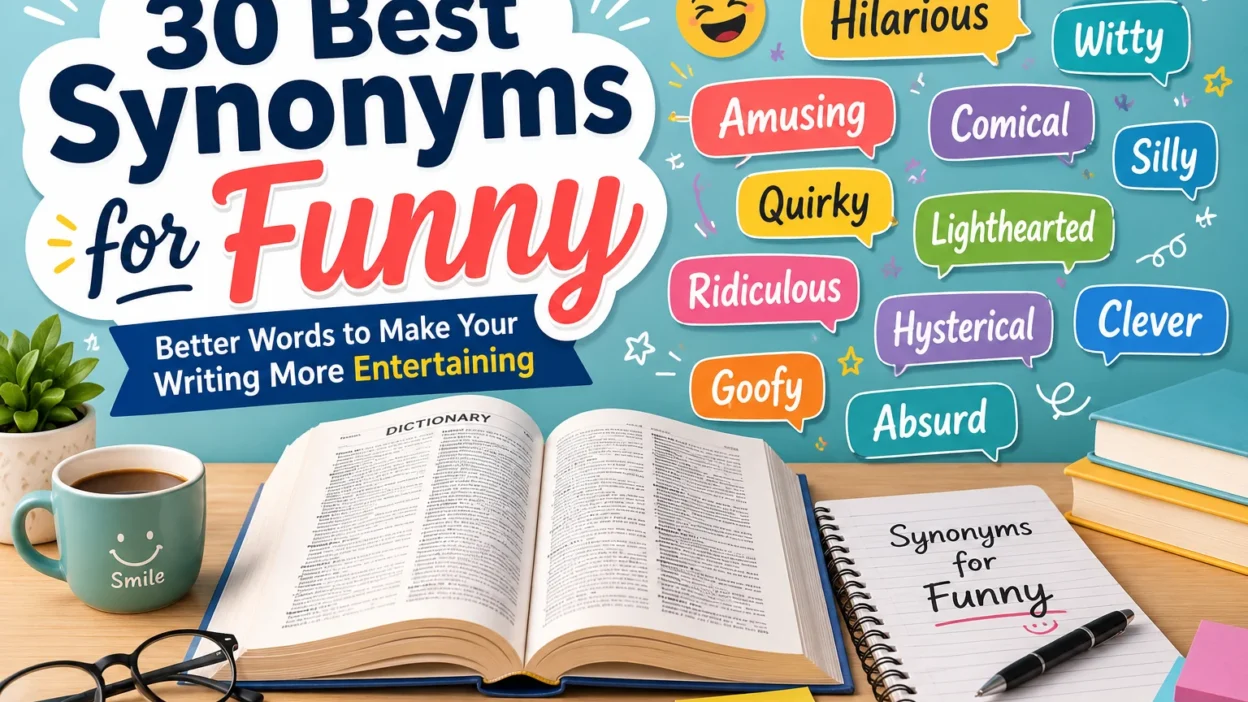
In this guide, you’ll discover 30 useful synonyms for funny, along with simple meanings, example sentences, and tips on when to use each one.
By the end, you’ll have a stronger vocabulary and know how to choose the right word for every context.
What Does “Funny” Mean?
Simple Meaning of Funny
The word funny describes something that makes people laugh or smile. It can also describe something that is unusual, strange, or unexpected, depending on the situation.
When Do We Use the Word “Funny”?
We commonly use funny to describe jokes, people, stories, movies, conversations, or situations that are amusing or entertaining. In some cases, funny can also mean “odd” or “strange.”
Examples:
- That joke was really funny.
- She’s the funniest person in our class.
- Something smells funny in the kitchen.
Although funny is a useful everyday word, using different synonyms can help you express different types of humor more clearly.
30 Synonyms for Funny
Complete List of Synonyms
Here are 30 useful synonyms for funny:
- Hilarious
- Amusing
- Humorous
- Comical
- Entertaining
- Witty
- Playful
- Silly
- Laughable
- Cheerful
- Comic
- Ridiculous
- Whimsical
- Goofy
- Jolly
- Hysterical
- Side-splitting
- Entertaining
- Clever
- Lighthearted
- Quirky
- Farcical
- Zany
- Droll
- Riotous
- Priceless
- Absurd
- Eccentric
- Jovial
- Bantering
Synonyms for Funny with Meanings, Examples, and Usage
1. Hilarious
Meaning: Extremely funny and making people laugh a lot.
Example Sentence:
The comedian told a hilarious story that made everyone laugh.
Best Usage Context:
Perfect for jokes, comedy shows, funny videos, and amusing stories.
2. Amusing
Meaning: Pleasantly funny or enjoyable.
Example Sentence:
His amusing comments kept the audience entertained.
Best Usage Context:
Ideal for books, conversations, movies, and light humor.
3. Humorous
Meaning: Full of humor or designed to make people laugh.
Example Sentence:
The article included several humorous examples.
Best Usage Context:
Best for writing, speeches, articles, and formal descriptions of comedy.
4. Comical
Meaning: Funny because something looks or behaves in a silly way.
Example Sentence:
The actor’s comical expressions made the audience laugh.
Best Usage Context:
Suitable for performances, cartoons, and visual comedy.
5. Entertaining
Meaning: Interesting and enjoyable in a fun way.
Example Sentence:
The movie was entertaining from beginning to end.
Best Usage Context:
Useful for movies, TV shows, books, games, and performances.
6. Witty
Meaning: Clever and funny in a smart way.
Example Sentence:
She is known for her witty remarks during meetings.
Best Usage Context:
Great for conversations, speeches, writing, and intelligent humor.
7. Playful
Meaning: Light-hearted, fun, and full of cheerful humor.
Example Sentence:
The puppy’s playful behavior made everyone smile.
Best Usage Context:
Perfect for children, pets, friendships, and casual conversations.
8. Silly
Meaning: Funny because it is a little foolish or childish.
Example Sentence:
We laughed at his silly dance moves.
Best Usage Context:
Best for family conversations, children’s stories, and informal situations.
9. Laughable
Meaning: So ridiculous that people laugh at it.
Example Sentence:
His excuse was completely laughable.
Best Usage Context:
Useful for weak arguments, unbelievable claims, and humorous criticism.
10. Cheerful
Meaning: Happy, positive, and making others feel good.
Example Sentence:
Her cheerful personality brightened the office.
Best Usage Context:
Suitable for describing people, conversations, and positive moods.
11. Comic
Meaning: Related to comedy or intended to make people laugh.
Example Sentence:
The play had several comic moments.
Best Usage Context:
Ideal for theater, films, literature, and performances.
12. Ridiculous
Meaning: Extremely silly or unreasonable in a funny way.
Example Sentence:
They wore ridiculous costumes to the party.
Best Usage Context:
Perfect for funny situations, comedy, fashion, and exaggerated behavior.
13. Whimsical
Meaning: Playfully unusual, imaginative, or charmingly funny.
Example Sentence:
The children’s book had whimsical illustrations.
Best Usage Context:
Best for art, stories, creative writing, and fantasy.
14. Goofy
Meaning: Silly in a fun, harmless, and lovable way.
Example Sentence:
My brother is always making goofy faces.
Best Usage Context:
Ideal for friends, family, social media, and casual conversations.
15. Jolly
Meaning: Cheerful, happy, and full of good humor.
Example Sentence:
The host kept everyone in a jolly mood throughout the evening.
Best Usage Context:
Suitable for celebrations, holidays, friendly gatherings, and positive personalities.
16. Hysterical
Meaning: Extremely funny and causing uncontrollable laughter.
Example Sentence:
Her imitation of the teacher was absolutely hysterical.
Best Usage Context:
Perfect for comedy shows, jokes, funny videos, and unforgettable stories.
17. Side-Splitting
Meaning: So funny that it makes people laugh very hard.
Example Sentence:
The stand-up comedian gave a side-splitting performance.
Best Usage Context:
Best for comedy specials, humorous books, and entertaining performances.
18. Clever
Meaning: Funny because it is smart, creative, or quick.
Example Sentence:
His clever response surprised everyone and made them laugh.
Best Usage Context:
Ideal for conversations, writing, speeches, and witty humor.
19. Lighthearted
Meaning: Cheerful, relaxed, and not serious.
Example Sentence:
The film had a lighthearted story that everyone enjoyed.
Best Usage Context:
Suitable for family movies, conversations, articles, and social events.
20. Quirky
Meaning: Unusual in an attractive, fun, or amusing way.
Example Sentence:
She has a quirky sense of humor that everyone loves.
Best Usage Context:
Perfect for personalities, fashion, books, films, and creative projects.
21. Farcical
Meaning: Extremely silly and exaggerated in a humorous way.
Example Sentence:
The play became farcical after the unexpected twist.
Best Usage Context:
Best for theater, satire, comedy, and humorous writing.
22. Zany
Meaning: Wildly funny, energetic, and a little crazy.
Example Sentence:
The cartoon featured zany characters and adventures.
Best Usage Context:
Great for cartoons, children’s entertainment, comedy shows, and playful stories.
23. Droll
Meaning: Funny in a quiet, clever, or unexpected way.
Example Sentence:
His droll sense of humor often caught people by surprise.
Best Usage Context:
Suitable for literature, conversations, and sophisticated humor.
24. Riotous
Meaning: Extremely funny and full of loud laughter.
Example Sentence:
The comedy movie was riotous from beginning to end.
Best Usage Context:
Ideal for live performances, comedy films, and humorous events.
25. Priceless
Meaning: So funny or surprising that it creates a memorable reaction.
Example Sentence:
The baby’s facial expression was absolutely priceless.
Best Usage Context:
Perfect for social media, family moments, and funny photos.
26. Absurd
Meaning: So unreasonable or strange that it becomes funny.
Example Sentence:
The movie included several absurd scenes that made everyone laugh.
Best Usage Context:
Best for satire, comedy, fiction, and unusual situations.
27. Eccentric
Meaning: Unusual or unconventional in an amusing way.
Example Sentence:
The professor’s eccentric habits often entertained the students.
Best Usage Context:
Useful for describing personalities, characters, and creative people.
28. Jovial
Meaning: Cheerful, friendly, and full of good humor.
Example Sentence:
His jovial personality made him popular with everyone.
Best Usage Context:
Suitable for people, celebrations, workplaces, and friendly gatherings.
29. Bantering
Meaning: Playfully exchanging funny or teasing remarks.
Example Sentence:
The coworkers spent lunch bantering about the weekend football match.
Best Usage Context:
Perfect for friendly conversations, relationships, and informal dialogue.
30. Chucklesome
Meaning: Mildly funny and likely to make people smile or chuckle.
Example Sentence:
The short story was chucklesome without being overly silly.
Best Usage Context:
Ideal for children’s books, light humor, blog posts, and casual entertainment.
Comparison Guide: When to Use Different Synonyms
Choosing the Best Word for the Situation
| Synonym | Best Used For | Tone |
|---|---|---|
| Hilarious | Jokes, comedy shows, videos | Very funny |
| Amusing | Stories, conversations, books | Friendly |
| Humorous | Essays, articles, speeches | Formal |
| Witty | Smart conversations, writing | Intelligent |
| Comical | Performances, cartoons | Playful |
| Silly | Family fun, children | Informal |
| Ridiculous | Funny situations, costumes | Casual |
| Quirky | Personalities, creativity | Positive |
| Lighthearted | Movies, articles, events | Relaxed |
| Side-splitting | Stand-up comedy, jokes | Extremely funny |
| Droll | Literature, dry humor | Sophisticated |
| Absurd | Satire, fiction | Creative |
| Jovial | Friendly people, celebrations | Warm |
| Farcical | Theater, satire | Dramatic |
| Priceless | Funny moments, photos | Informal |
How to Choose the Right Synonym
For Academic Writing
If you’re writing essays or formal assignments, choose words that sound professional and precise.
Good choices include:
- Humorous
- Witty
- Comical
- Clever
- Droll
- Farcical
For Creative Writing
Stories become more engaging when the humor matches the characters and situations.
Try these words:
- Hilarious
- Quirky
- Absurd
- Zany
- Whimsical
- Riotous
For Everyday Conversation
Simple and familiar words sound the most natural in daily speech.
Consider using:
- Funny
- Amusing
- Silly
- Goofy
- Lighthearted
- Cheerful
For Business and Professional Writing
In professional settings, it’s best to use words that describe humor without sounding too casual.
Useful options include:
- Humorous
- Witty
- Clever
- Lighthearted
- Amusing
- Jovial
For Reviews and Content Creation
If you’re reviewing a movie, TV show, book, or comedy performance, stronger descriptive words make your opinion clearer.
Excellent choices are:
- Hilarious
- Side-splitting
- Riotous
- Quirky
- Absurd
- Priceless
Common Mistakes to Avoid
Don’t Use Every Synonym the Same Way
Although these words all relate to humor, they have different meanings. For example, witty describes clever humor, while silly refers to playful or childish humor.
Match the Tone
Formal writing works better with words like humorous or clever, while casual conversations often sound more natural with goofy, silly, or hilarious.
Think About Your Audience
Choose simple vocabulary for general readers and ESL learners. More advanced words like droll or farcical are better suited to readers with a stronger English vocabulary.
FAQs
What is the best synonym for “funny”?
Some of the best synonyms are hilarious, amusing, humorous, witty, and comical. The right choice depends on the type of humor you want to describe.
Which synonym is best for essays?
For academic writing, humorous, witty, clever, and comical are excellent choices because they sound natural and professional.
Is “hilarious” stronger than “funny”?
Yes. Hilarious usually means something is much funnier than simply funny and causes people to laugh a lot.
Can I use “amusing” instead of “funny”?
Absolutely. Amusing is a great alternative when describing something that is pleasantly funny without being extremely hilarious.
Conclusion
Learning different synonyms for funny is an excellent way to improve your English vocabulary and make your writing more expressive.
While funny is a useful everyday word, choosing a more specific synonym helps you describe different kinds of humor with greater accuracy.
If you’re writing an essay, telling a story, reviewing a comedy movie, or chatting with friends, words like hilarious, amusing, witty, quirky, comical, and lighthearted can make your language more engaging and natural.
The more you practice using these alternatives, the more confident and versatile your writing and speaking will become.

Gabriel John is a language enthusiast and grammar writer at Synolexes. He creates clear, practical content on English grammar, vocabulary, and writing, helping learners improve communication skills with confidence.