The word happy is one of the most common positive words in English. We use it to describe feelings of joy, pleasure, satisfaction, comfort, and emotional well-being. Students use it in essays, ESL learners hear it in everyday conversations, writers use it in stories and dialogue, and content creators use it in captions, blog posts, and scripts. Because it is simple and useful, it appears very often in spoken and written English.
But the word happy can mean many slightly different things. Someone can feel happy because they are calm, excited, grateful, proud, relieved, or deeply joyful. These are not exactly the same feelings. That is why learning synonyms for happy is so useful. A better synonym can help you show the exact emotion more clearly and make your writing sound more natural.
In this article, you will learn 30 useful synonyms for happy with simple meanings, example sentences, and beginner-friendly usage notes. You will also find a comparison table and a practical guide to choosing the right synonym based on tone and meaning. The article is written in simple English, so it is easy to understand for students, ESL learners, writers, and content creators.
What Does “Happy” Mean?
The word happy means feeling good, pleased, glad, or full of positive emotion. It can describe a temporary feeling, a general mood, or a deep sense of satisfaction.
Simple meaning of happy
Someone is happy if they:
- feel joy or pleasure
- feel satisfied or content
- enjoy what is happening
- feel emotionally good
- have a positive mood
Example sentences
- I felt happy when I saw my exam results.
- She looks happy in the family photo.
- We are happy to help you.
The word happy is clear and useful, but it is also very general. Sometimes you may want a more specific word to show a stronger, softer, deeper, or more emotional kind of happiness.
Why Learn Synonyms for Happy?
Learning different synonyms for happy can improve your English in several ways.
It reduces repetition
If you use happy too many times in one paragraph, story, or article, your writing may sound repetitive.
It makes emotions more precise
A synonym can show what kind of happiness you mean. For example, delighted sounds stronger than happy, while content suggests calm satisfaction.
It improves tone
Some words sound warm and casual, while others sound formal, emotional, or literary. Choosing the right synonym helps your writing match the situation.
It makes writing more expressive
A stronger word can help readers imagine the feeling more clearly and connect with your message.
What Do “Given Keywords” Mean in This Article?
In this article, given keywords means the 30 target words listed as synonyms for happy. These are the vocabulary words you are learning and comparing.
Simple meaning of given keywords
“Given keywords” simply means:
- the words provided in the article
- the vocabulary items being explained
- the target terms you should focus on
Tone and usage context
The phrase given keywords is neutral and instructional. It is often used in:
- SEO content briefs
- writing prompts
- vocabulary worksheets
- school assignments
- blog outlines
Example in context
- In this guide, the given keywords are the 30 synonyms for happy explained below.
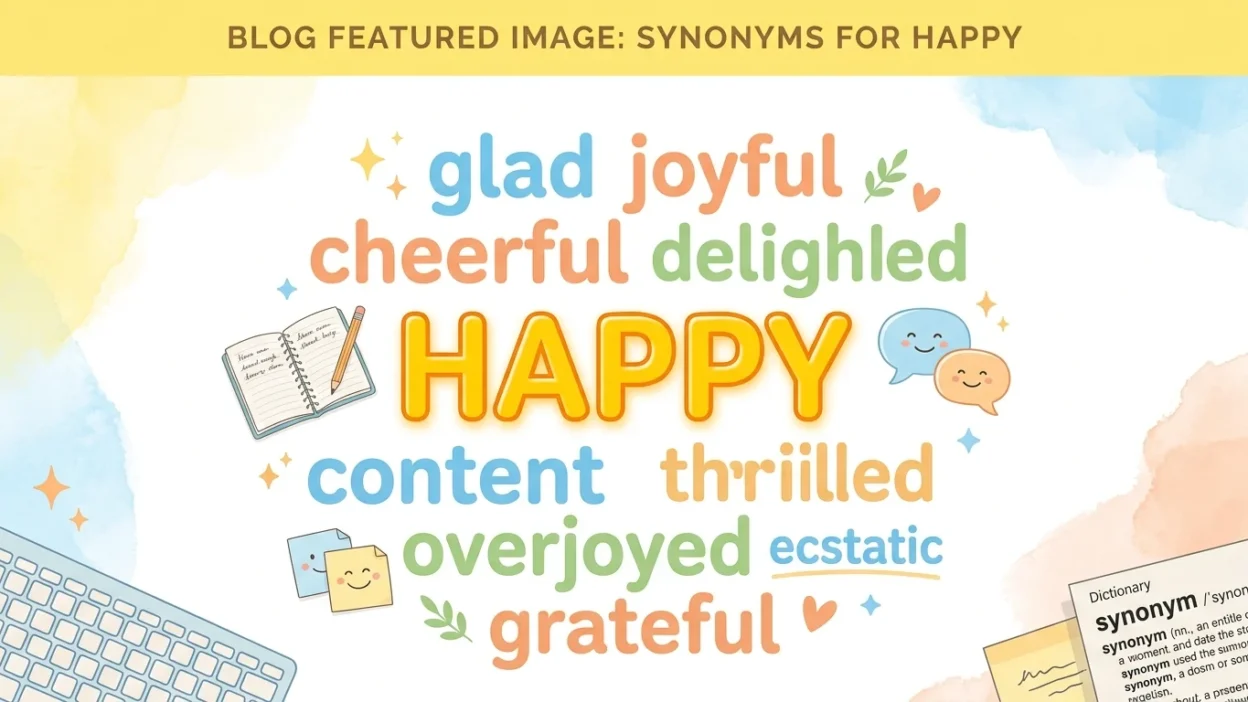
So in this article, the given keywords are words like glad, cheerful, delighted, and content—all of which express different shades of happiness.
30 Synonyms for Happy
1. Glad
Meaning
Pleased or happy about something.
Example sentence
I’m glad you arrived safely.
Best usage context
Use in everyday conversation when you feel pleased or relieved.
2. Joyful
Meaning
Full of joy and strong happiness.
Example sentence
The children were joyful on the first day of vacation.
Best usage context
Best for warm, emotional, and uplifting situations.
3. Cheerful
Meaning
Noticeably happy, positive, and bright in mood.
Example sentence
She gave us a cheerful smile in the morning.
Best usage context
Good for describing a person’s mood, personality, or atmosphere.
4. Delighted
Meaning
Very happy and pleased about something.
Example sentence
We were delighted to hear the good news.
Best usage context
Use for strong pleasure, especially after receiving good news or a kind surprise.
5. Pleased
Meaning
Satisfied and happy about something.
Example sentence
The teacher was pleased with the students’ progress.
Best usage context
Useful in polite speech, school, work, and formal situations.
6. Content
Meaning
Calmly happy and satisfied with what you have.
Example sentence
He felt content sitting quietly in the garden.
Best usage context
Best for peaceful happiness, satisfaction, and emotional calm.
7. Satisfied
Meaning
Happy because something met your needs or expectations.
Example sentence
The customer was satisfied with the service.
Best usage context
Good for results, services, work, or completed tasks.
8. Thrilled
Meaning
Extremely happy, excited, and full of energy.
Example sentence
She was thrilled to win the competition.
Best usage context
Use for exciting news, success, or special opportunities.
9. Overjoyed
Meaning
Extremely happy, often because of wonderful news.
Example sentence
His parents were overjoyed when he graduated.
Best usage context
Best for life events, celebrations, and emotional moments.
10. Ecstatic
Meaning
So happy that you feel intense excitement or joy.
Example sentence
Fans were ecstatic after the team won the final.
Best usage context
Use for very strong excitement and unforgettable happy moments.
11. Elated
Meaning
Very happy and proud, often after success.
Example sentence
She felt elated after receiving the scholarship.
Best usage context
Good for achievements, victories, and personal success.
12. Jubilant
Meaning
Showing great joy, celebration, and excitement.
Example sentence
The crowd was jubilant after the announcement.
Best usage context
Best for public celebrations, festivals, and big wins.
13. Merry
Meaning
Happy, lively, and full of fun.
Example sentence
Everyone was merry at the holiday dinner.
Best usage context
Use for festive, social, and holiday settings.
14. Lighthearted
Meaning
Happy, relaxed, and not worried.
Example sentence
We had a lighthearted conversation after lunch.
Best usage context
Good for casual, fun, and stress-free situations.
15. Upbeat
Meaning
Positive, cheerful, and hopeful.
Example sentence
She stayed upbeat even during a difficult week.
Best usage context
Best for attitude, mood, motivation, and encouraging situations.
16. Optimistic
Meaning
Happy and hopeful about the future.
Example sentence
He felt optimistic about his interview.
Best usage context
Use when someone expects good results or a better future.
17. Sunny
Meaning
Bright, cheerful, and positive in mood or personality.
Example sentence
Her sunny attitude made the office feel friendlier.
Best usage context
Useful for describing personality, tone, or atmosphere.
18. Blissful
Meaning
Perfectly happy, peaceful, and full of joy.
Example sentence
They spent a blissful weekend by the lake.
Best usage context
Best for calm, beautiful, deeply happy moments.
19. Thankful
Meaning
Happy and grateful for something good.
Example sentence
I’m thankful for all your support.
Best usage context
Use when happiness is connected to gratitude.
20. Grateful
Meaning
Feeling happy and appreciative because of kindness or help.
Example sentence
She was grateful for the chance to study abroad.
Best usage context
Best for appreciation, kindness, support, and meaningful opportunities.
21. Relieved
Meaning
Happy because worry, stress, or fear has ended.
Example sentence
I felt relieved when the test was over.
Best usage context
Use after stress, fear, pressure, or uncertainty.
22. Comfortable
Meaning
Feeling relaxed, safe, and at ease.
Example sentence
The children looked comfortable and happy in their new classroom.
Best usage context
Good for emotional ease, safe spaces, and relaxed settings.
23. Buoyant
Meaning
Cheerful, lively, and full of positive energy.
Example sentence
He remained buoyant despite the busy schedule.
Best usage context
Useful for lively moods, energetic personalities, and positive attitudes.
24. Radiant
Meaning
Clearly showing happiness through your face or expression.
Example sentence
The bride looked radiant on her wedding day.
Best usage context
Best for visible joy, glowing expressions, and emotional moments.
25. Chipper
Meaning
Lively, cheerful, and energetic in an informal way.
Example sentence
She sounded chipper on the phone this morning.
Best usage context
Casual conversations about someone’s mood or energy.
26. Joyous
Meaning
Full of joy and celebration.
Example sentence
It was a joyous family reunion.
Best usage context
Good for celebrations, weddings, holidays, and emotional gatherings.
27. Exuberant
Meaning
Very energetic, excited, and full of happy enthusiasm.
Example sentence
The kids were exuberant after the school trip.
Best usage context
Best for high-energy happiness, excitement, and lively behavior.
28. Peaceful
Meaning
Happy in a calm, quiet, and emotionally settled way.
Example sentence
He felt peaceful while walking near the river.
Best usage context
Use for calm happiness, nature, rest, and emotional balance.
29. Delighted-to-bits
Meaning
Extremely happy in a warm, informal way.
Example sentence
My grandmother was delighted to bits with the handmade gift.
Best usage context
Informal British-style expression for very happy reactions.
30. On Cloud Nine
Meaning
Extremely happy and excited.
Example sentence
She was on cloud nine after getting her dream job.
Best usage context
Use as an idiomatic expression for big happy moments and exciting news.
Comparison Table: When to Use Different Synonyms for Happy
| Word | Simple Meaning | Tone | Best Used When |
|---|---|---|---|
| glad | pleased or happy | neutral | everyday conversation |
| joyful | full of joy | warm | emotional and uplifting moments |
| cheerful | positive and bright | friendly | mood, personality, atmosphere |
| delighted | very pleased | warm/strong | good news and pleasant surprises |
| pleased | satisfied and happy | polite | school, work, formal settings |
| content | calmly satisfied | calm | peaceful happiness |
| satisfied | happy because expectations were met | neutral | service, results, completed tasks |
| thrilled | extremely happy and excited | strong | success, exciting events |
| overjoyed | extremely happy | emotional | celebrations and life events |
| ecstatic | intensely happy | very strong | unforgettable exciting moments |
| elated | very happy and proud | strong | achievements and success |
| jubilant | openly joyful and celebratory | festive | crowds, public celebrations |
| merry | lively and festive | warm | holidays and social events |
| lighthearted | relaxed and cheerful | casual | easy, stress-free situations |
| upbeat | positive and hopeful | modern | attitude and motivation |
| optimistic | hopeful about the future | neutral | goals, plans, challenges |
| sunny | bright and cheerful | friendly | personality and atmosphere |
| blissful | perfectly happy and peaceful | soft/emotional | quiet, beautiful moments |
| thankful | happy and grateful | warm | appreciation and kindness |
| grateful | appreciative and happy | warm/formal | support, help, opportunities |
| relieved | happy because worry ended | specific | stress, fear, uncertainty |
| comfortable | relaxed and at ease | gentle | safe, calm, familiar settings |
| buoyant | lively and positive | slightly formal | energetic positive mood |
| radiant | visibly glowing with happiness | expressive | weddings, celebrations, proud moments |
| chipper | cheerful and energetic | informal | casual speech |
| joyous | full of joy | warm/formal | celebrations and reunions |
| exuberant | energetic happy excitement | strong | lively people and exciting events |
| peaceful | calm and emotionally settled | soft | quiet happiness and reflection |
| delighted to bits | extremely happy | informal | warm, casual reactions |
| on cloud nine | extremely happy and excited | idiomatic | major good news and big moments |
How to Choose the Right Synonym
Choosing the right synonym for happy depends on what kind of happiness you want to express. Is it calm happiness? Excited happiness? Grateful happiness? A public celebration? Here is a simple guide.
If You Mean Simple Everyday Happiness
Use
- glad
- pleased
- cheerful
- upbeat
Quick guide
- glad = simple, common, natural
- pleased = polite and slightly formal
- cheerful = bright and friendly mood
- upbeat = positive and hopeful attitude
If You Mean Strong Excited Happiness
Use
- thrilled
- delighted
- overjoyed
- ecstatic
- elated
Quick guide
- thrilled = excited and very happy
- delighted = warmly pleased
- overjoyed = emotionally very happy
- ecstatic = intense excitement and joy
- elated = very happy, often after success
If You Mean Calm or Peaceful Happiness
Use
- content
- peaceful
- comfortable
- blissful
Quick guide
- content = satisfied with life or the moment
- peaceful = calm and emotionally settled
- comfortable = relaxed and at ease
- blissful = deeply peaceful and beautifully happy
If You Mean Gratitude-Based Happiness
Use
- thankful
- grateful
- relieved
Quick guide
- thankful = happy because something good happened
- grateful = appreciative because of kindness or help
- relieved = happy because stress or fear is gone
If You Mean Festive or Public Joy
Use
- jubilant
- joyous
- merry
- radiant
Quick guide
- jubilant = public celebration and strong joy
- joyous = warm celebration and togetherness
- merry = fun, festive, and social
- radiant = visibly glowing with happiness
If You Want Informal or Casual Expressions
Use
- chipper
- delighted to bits
- on cloud nine
Quick guide
- chipper = cheerful in a casual way
- delighted to bits = very happy in warm informal English
- on cloud nine = extremely happy and excited
When You Should Still Use “Happy”
Even though there are many useful synonyms for happy, the word happy itself is still one of the best choices in many situations. It is simple, clear, natural, and easy to understand. Sometimes it is exactly the right word.
Use happy when:
- you want a general positive emotion
- the exact shade of feeling is not important
- you are writing for beginners or ESL learners
- you want your sentence to sound simple and natural
Example
- I’m happy to see you again.
This sentence is warm, clear, and completely natural.
Common Mistakes When Using Synonyms for Happy
Choosing a word that is too strong
Words like ecstatic and overjoyed are much stronger than happy. Use them only for truly big emotions.
Using calm words for exciting moments
Words like content or peaceful do not fit energetic celebrations. Choose them for quiet happiness, not exciting news.
Using informal phrases in formal writing
Expressions like on cloud nine or delighted to bits are better for casual writing than formal essays or professional content.
Replacing happy every time
You do not need to avoid happy completely. The goal is to choose a better word only when it adds meaning, tone, or emotional detail.
Tips for Students, ESL Learners, and Writers
Ask what kind of happiness you mean
Before choosing a synonym, ask:
- Is the feeling calm or excited?
- Is it about success or relief?
- Is the person grateful?
- Is it a private feeling or a public celebration?
Match the tone to the context
Use simple words like glad and happy in everyday English. Use words like elated, jubilant, or radiant when you want stronger or more expressive writing.
Learn words in groups
This makes them easier to remember.
Everyday positive words
- glad
- pleased
- cheerful
- upbeat
Strong excitement words
- thrilled
- ecstatic
- overjoyed
- elated
Calm happiness words
- content
- peaceful
- blissful
- comfortable
Gratitude and relief words
- thankful
- grateful
- relieved
Practice with your own sentences
Try replacing happy with different synonyms and notice how the tone changes.
Example
Original:
- She felt happy after the interview.
Try:
- She felt relieved after the interview.
- She felt thrilled after the interview.
- She felt content after the interview.
Each word changes the emotional meaning in a different way.
Final Thoughts
Learning useful synonyms for happy can make your English more expressive, more natural, and more precise. Instead of using one general word for every positive feeling, you can choose a synonym that better matches the situation. Sometimes happiness is calm and peaceful, sometimes it is full of excitement, and sometimes it comes from gratitude, relief, or success. The right word helps you show that difference clearly.
The best way to learn these words is to group them by feeling. Use glad, pleased, and cheerful for everyday happiness. Use thrilled, ecstatic, and overjoyed for strong excitement. Use content, peaceful, and blissful for calm happiness. Use thankful, grateful, and relieved when happiness is connected to support, kindness, or the end of stress.
Most importantly, remember that happy is still a great word. You do not need to replace it every time. Just choose a synonym when it helps your writing sound clearer, richer, or more emotionally accurate.