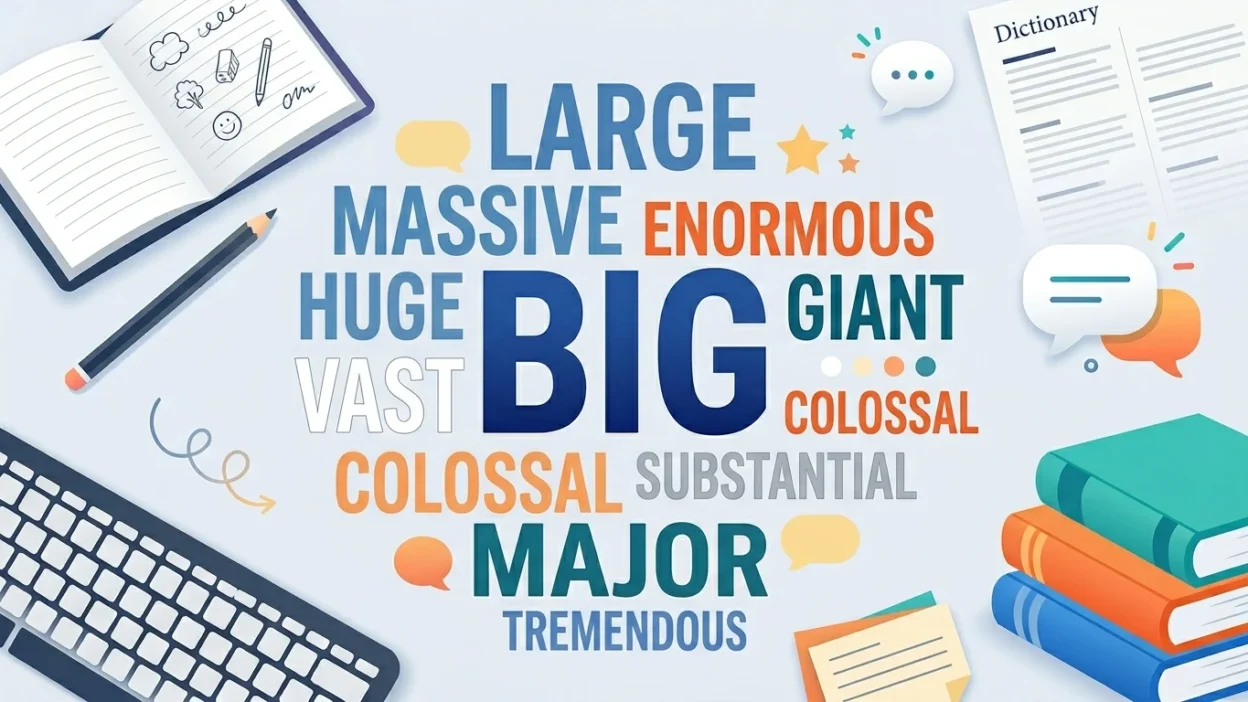
The word big is one of the most common adjectives in English. We use it to talk about size, importance, amount, power, influence, and even emotions.
Students use it in essays, ESL learners hear it in daily conversations, writers use it in stories, and content creators use it in blogs, captions, and scripts. Because it is simple and flexible, big appears in many kinds of writing and speech.
But there is one problem: big is a very broad word. A big house, a big mistake, a big opportunity, and a big company do not all mean the same thing. Sometimes big refers to physical size.
Sometimes it means important, serious, powerful, or impressive. That is why learning synonyms for big is so useful. The right synonym can make your meaning clearer and your writing more natural.
In this article, you will learn 30 useful synonyms for big with simple meanings, example sentences, and beginner-friendly usage notes.
You will also find a comparison table and a practical guide to choosing the right synonym based on tone and meaning.
The article is written in simple English, so it is easy to understand for students, ESL learners, writers, and content creators.
What Does “Big” Mean?
The word big usually means large in size, amount, importance, or effect. It can describe something physical, like a building or animal, or something abstract, like a problem, decision, or success.
Simple meaning of big
Something is big if it:
- is large in size
- has a large amount
- is important or serious
- has strong influence or effect
- feels impressive or major
Example sentences
- They live in a big house near the park.
- This is a big decision for our family.
- She made a big improvement in her writing.
The word big is useful because it works in many situations. But because it is so general, it may not always be the best word. Sometimes a more specific synonym can explain your meaning better.
Why Learn Synonyms for Big?
Learning different synonyms for big can improve your writing and vocabulary in many ways.
It reduces repetition
If you use big too often in an essay, article, or story, your writing may sound repetitive.
It makes your meaning more precise
A synonym can show whether something is large in size, important, serious, powerful, or impressive.
It improves tone
Some synonyms sound formal, some sound casual, and some sound dramatic. Choosing the right word helps your writing fit the situation.
It makes your writing stronger
Using the right synonym can make your sentence clearer, richer, and more expressive.
What Do “Given Keywords” Mean in This Article?
In this article, given keywords means the 30 target words listed as synonyms for big. These are the vocabulary words you are learning and comparing.
Simple meaning of given keywords
“Given keywords” simply means:
- the words provided in the article
- the vocabulary items being explained
- the target terms you should focus on
Tone and usage context
The phrase given keywords is neutral and instructional. It is often used in:
- SEO content briefs
- writing prompts
- vocabulary exercises
- school assignments
- article outlines
Example in context
- In this guide, the given keywords are the 30 synonyms for big explained below.
So in this article, the given keywords are words like large, huge, massive, and major—all of which express different shades of the meaning of big.
30 Synonyms for Big
1. Large
Meaning
Bigger than average in size, amount, or number.
Example sentence
They bought a large dining table for the new house.
Best usage context
Use as the most direct and natural synonym for physical size or quantity.
2. Huge
Meaning
Very big in size, amount, or importance.
Example sentence
The company made a huge profit this year.
Best usage context
Good for strong emphasis in everyday writing and speech.
3. Giant
Meaning
Extremely big; much larger than normal.
Example sentence
A giant statue stood in the middle of the square.
Best usage context
Best for physical objects, animals, or dramatic description.
4. Massive
Meaning
Very large, heavy, or impressive in size or scale.
Example sentence
The storm caused massive damage across the city.
Best usage context
Use for buildings, crowds, problems, and serious impact.
5. Enormous
Meaning
Extremely large in size or amount.
Example sentence
She faced an enormous amount of work before the deadline.
Best usage context
Useful for both physical size and abstract things like effort or cost.
6. Immense
Meaning
Very large or great, often in scale or intensity.
Example sentence
The project required immense patience and planning.
Best usage context
Good for formal or descriptive writing about size, effort, or value.
7. Vast
Meaning
Very large and wide, often covering a lot of space or amount.
Example sentence
They looked across the vast desert in silence.
Best usage context
Best for landscapes, collections, knowledge, or large areas.
8. Gigantic
Meaning
Extremely large, even more dramatic than big.
Example sentence
A gigantic wave crashed against the rocks.
Best usage context
Use for dramatic size in storytelling or vivid description.
9. Colossal
Meaning
Extremely large and impressive.
Example sentence
The museum displayed a colossal stone sculpture.
Best usage context
Good for dramatic, formal, or impressive description.
10. Tremendous
Meaning
Very large, great, or impressive in amount, power, or effect.
Example sentence
She made tremendous progress in her English this year.
Best usage context
Best for improvement, success, support, effort, or impact.
11. Great
Meaning
Large in amount, degree, or importance.
Example sentence
The country faced great economic challenges.
Best usage context
Useful in formal writing, especially for importance or seriousness.
12. Major
Meaning
Very important, serious, or large in effect.
Example sentence
The company announced a major change in policy.
Best usage context
Best for events, decisions, problems, and official writing.
13. Significant
Meaning
Important, meaningful, or large enough to matter.
Example sentence
There was a significant increase in sales last month.
Best usage context
Use in academic, business, or analytical writing.
14. Considerable
Meaning
Quite large in size, amount, or degree.
Example sentence
The repair work took a considerable amount of time.
Best usage context
Good for formal writing about time, effort, money, or change.
15. Substantial
Meaning
Large in size, amount, value, or importance.
Example sentence
They received a substantial donation for the school library.
Best usage context
Best for money, support, evidence, growth, or resources.
16. Sizable
Meaning
Fairly large in size or amount.
Example sentence
The company made a sizable investment in new equipment.
Best usage context
Useful for money, groups, rooms, or measurable growth.
17. Hefty
Meaning
Big, heavy, or large in amount.
Example sentence
He paid a hefty fine for breaking the rules.
Best usage context
Good for weight, costs, penalties, or large amounts in informal writing.
18. Mammoth
Meaning
Very large and difficult because of size or scale.
Example sentence
Cleaning the entire warehouse was a mammoth task.
Best usage context
Best for huge jobs, projects, efforts, or challenges.
19. Monumental
Meaning
Very great in importance, size, or significance.
Example sentence
Winning the championship was a monumental moment for the team.
Best usage context
Use for historic events, major achievements, or life-changing moments.
20. Grand
Meaning
Large, impressive, and sometimes elegant or important.
Example sentence
They stayed in a grand old hotel by the sea.
Best usage context
Best for buildings, plans, events, or impressive style.
21. Bulky
Meaning
Large and difficult to carry because of shape or size.
Example sentence
The package was too bulky to fit in the car.
Best usage context
Use for objects, furniture, bags, or items that take up space.
22. Broad
Meaning
Wide or large across from one side to the other.
Example sentence
The table had a broad surface for working.
Best usage context
Best for width, shoulders, roads, ideas, or general scope.
23. Expansive
Meaning
Wide, open, or covering a large area.
Example sentence
The house had an expansive garden behind it.
Best usage context
Good for land, views, rooms, and broad ideas.
24. Towering
Meaning
Very tall and impressively large.
Example sentence
Towering trees lined the mountain path.
Best usage context
Best for height, buildings, trees, and dramatic visual description.
25. Oversized
Meaning
Larger than the normal or expected size.
Example sentence
She wore an oversized sweater on the cold evening.
Best usage context
Useful for clothes, furniture, luggage, or objects bigger than standard.
26. Powerful
Meaning
Big in effect, strength, influence, or force.
Example sentence
The speech had a powerful effect on the audience.
Best usage context
Use when big means strong, influential, or emotionally intense.
27. Important
Meaning
Big in meaning, value, or effect rather than physical size.
Example sentence
This is an important conversation for both of us.
Best usage context
Best when big means meaningful, serious, or worth attention.
28. Serious
Meaning
Big enough to cause concern or deserve attention.
Example sentence
The team faced a serious problem before the launch.
Best usage context
Use when big means dangerous, difficult, or not minor.
29. Weighty
Meaning
Important, serious, or heavy in meaning.
Example sentence
They discussed several weighty issues during the meeting.
Best usage context
Best for formal writing about serious topics, decisions, or responsibilities.
30. Epic
Meaning
Very big, impressive, or extraordinary.
Example sentence
The travelers shared an epic adventure across the mountains.
Best usage context
Informal or creative writing about something memorable, dramatic, or exciting.
Comparison Table: When to Use Different Synonyms for Big
| Word | Simple Meaning | Tone | Best Used When |
|---|---|---|---|
| large | bigger than average | neutral | size, number, amount |
| huge | very big | common/strong | general emphasis |
| giant | extremely big | vivid | objects, animals, dramatic size |
| massive | very large and heavy | strong | buildings, damage, crowds |
| enormous | extremely large | strong | size, cost, effort, quantity |
| immense | very large or great | formal | scale, value, effort |
| vast | very wide or extensive | descriptive | land, knowledge, space |
| gigantic | extremely large | dramatic | storytelling, vivid size |
| colossal | extremely large and impressive | formal/dramatic | statues, buildings, impact |
| tremendous | very great or impressive | positive/strong | progress, support, success |
| great | large or important | formal/literary | challenges, effect, importance |
| major | very important or serious | formal | changes, decisions, events |
| significant | important enough to matter | formal | data, growth, research |
| considerable | quite large | formal | amount, time, effort |
| substantial | large and meaningful | formal | money, support, evidence |
| sizable | fairly large | neutral | rooms, groups, investments |
| hefty | large or heavy | informal | fines, bills, bags |
| mammoth | huge and difficult | expressive | tasks, projects, effort |
| monumental | extremely important or large | formal/strong | achievements, historic moments |
| grand | large and impressive | descriptive | buildings, events, plans |
| bulky | large and hard to carry | practical | furniture, bags, packages |
| broad | wide across | neutral | roads, shoulders, scope |
| expansive | wide and open | descriptive | views, gardens, ideas |
| towering | very tall and impressive | vivid | trees, buildings, cliffs |
| oversized | bigger than normal | practical | clothes, items, furniture |
| powerful | strong in effect or influence | flexible | speech, leaders, emotions |
| important | meaningful and serious | neutral | decisions, moments, discussions |
| serious | not small or minor | neutral | problems, risks, concerns |
| weighty | serious and important | formal | topics, issues, responsibilities |
| epic | very big and memorable | informal/creative | adventures, moments, events |
How to Choose the Right Synonym
Choosing the right synonym for big depends on what kind of “big” you mean. Are you talking about physical size, importance, amount, influence, or emotional impact? Here is a simple guide.
If You Mean Physical Size
Use
- large
- huge
- massive
- enormous
- gigantic
- colossal
Quick guide
- large = simple and neutral
- huge = very common and strong
- massive = heavy, solid, and very large
- enormous = extremely large in a clear way
- gigantic = dramatic and vivid
- colossal = very large and impressive
If You Mean a Large Amount
Use
- considerable
- substantial
- sizable
- hefty
- tremendous
Quick guide
- considerable = fairly large, often formal
- substantial = large and meaningful
- sizable = clearly large but not extreme
- hefty = large, often in cost or weight
- tremendous = very large or impressive
If You Mean Importance or Seriousness
Use
- major
- significant
- important
- serious
- weighty
- monumental
Quick guide
- major = very important or official
- significant = meaningful enough to matter
- important = simple and clear
- serious = not minor and possibly concerning
- weighty = serious and thoughtful
- monumental = extremely important or historic
If You Mean Wide Space or Scale
Use
- vast
- expansive
- broad
- immense
Quick guide
- vast = very wide and extensive
- expansive = open and wide
- broad = wide from side to side
- immense = very large in scale or extent
If You Mean Strong Effect or Influence
Use
- powerful
- major
- tremendous
- significant
Quick guide
- powerful = strong in force or effect
- major = important and serious
- tremendous = impressive in impact
- significant = noticeable and meaningful
If You Want a More Creative or Dramatic Tone
Use
- epic
- gigantic
- colossal
- towering
- mammoth
Quick guide
- epic = memorable and exciting
- gigantic = vivid size
- colossal = grand and impressive
- towering = very tall and striking
- mammoth = huge and difficult
When You Should Still Use “Big”
Even though there are many useful synonyms for big, the word big is still one of the best choices in many situations. It is simple, natural, and easy to understand. Sometimes it is the clearest word.
Use big when:
- you want a simple everyday word
- the exact type of size or importance is not the main focus
- you are writing for beginners or ESL learners
- you want your sentence to sound natural and direct
Example
- We have a big test tomorrow.
This sentence is simple, clear, and completely natural.
Common Mistakes When Using Synonyms for Big
Choosing a word that does not match the meaning
Not every synonym of big works in every sentence. For example, towering works for height, but not for a large amount of money.
Using dramatic words for normal situations
Words like colossal, epic, or monumental can sound too strong if the situation is ordinary.
Mixing physical size with importance
A big meeting might mean an important meeting, not a physically large one. Choose major or important if you mean significance instead of size.
Replacing big every time
You do not need to remove every use of big. The goal is to choose a stronger word only when it makes your meaning clearer.
Tips for Students, ESL Learners, and Writers
Ask what kind of “big” you mean
Before choosing a synonym, ask:
- Is it physically large?
- Is it important or serious?
- Is it a large amount?
- Is it wide or tall?
- Is it strong in effect or influence?
Match the tone to the context
Use simple words like large or big in everyday writing. Use words like significant, substantial, or monumental in more formal writing.
Learn words in groups
This makes them easier to remember.
Size words
- large
- huge
- enormous
- gigantic
- massive
Importance words
- major
- significant
- important
- monumental
- weighty
Amount words
- considerable
- substantial
- sizable
- hefty
Creative description words
- epic
- colossal
- mammoth
- towering
Practice with your own sentences
Try replacing big with different synonyms and see how the meaning changes.
Example
Original:
- They made a big decision.
Try:
- They made a major decision.
- They made an important decision.
- They made a weighty decision.
Each word changes the tone slightly and adds more detail.
Final Thought
Learning useful synonyms for big can make your English clearer, more expressive, and more precise. Instead of using one broad word for every situation, you can choose a synonym that better fits the meaning.
Sometimes big means physical size, sometimes it means importance, and sometimes it means a large amount, strong effect, or dramatic impact. The right synonym helps your writing show that difference clearly.
The best way to learn these words is to group them by meaning. Use large, huge, and massive for physical size. Use major, significant, and important for serious or meaningful situations.
Use substantial, considerable, and sizable for large amounts. Use epic, colossal, and mammoth when you want a more dramatic tone.
Most importantly, remember that big is still a useful and natural word. You do not need to replace it every time. Just choose a different word when it helps your writing sound more specific, more engaging, or more accurate.

Julian Luke is a passionate grammar and language writer at Synolexes. He simplifies complex grammar rules, vocabulary, and writing concepts, helping learners improve their English communication skills with confidence.