Have you ever described a movie, class, book, or conversation as boring? W
hile this word is simple and commonly used, repeating it too often can make your writing sound repetitive.
Learning different synonyms for boring helps you express exactly how dull, uninteresting, or repetitive something feels.
If you’re a student writing essays, an ESL learner expanding your vocabulary, a writer creating engaging stories, or a content creator looking for stronger word choices, knowing alternatives to boring can improve your communication.
Each synonym has its own shade of meaning, making it easier to describe different situations accurately.
In this guide, you’ll learn 30 useful synonyms for boring, along with simple meanings, example sentences, and the best situations to use each word.
By understanding these alternatives, you’ll be able to write more naturally and choose the right word with confidence.
What Does “Boring” Mean?
Simple Meaning of Boring
The word boring describes something that is not interesting, enjoyable, or exciting. It can refer to people, books, classes, movies, speeches, jobs, activities, or conversations that fail to keep your attention.
When Do We Use the Word “Boring”?
We use boring when something makes us feel uninterested, tired, or mentally unstimulated. It is a common word in everyday English and works well in both speaking and writing.
Examples:
- The lecture was boring.
- I found the movie boring.
- Waiting in a long line can be boring.
Although boring is easy to understand, using different synonyms can make your writing more descriptive and engaging.
30 Synonyms for Boring
Complete List of Synonyms
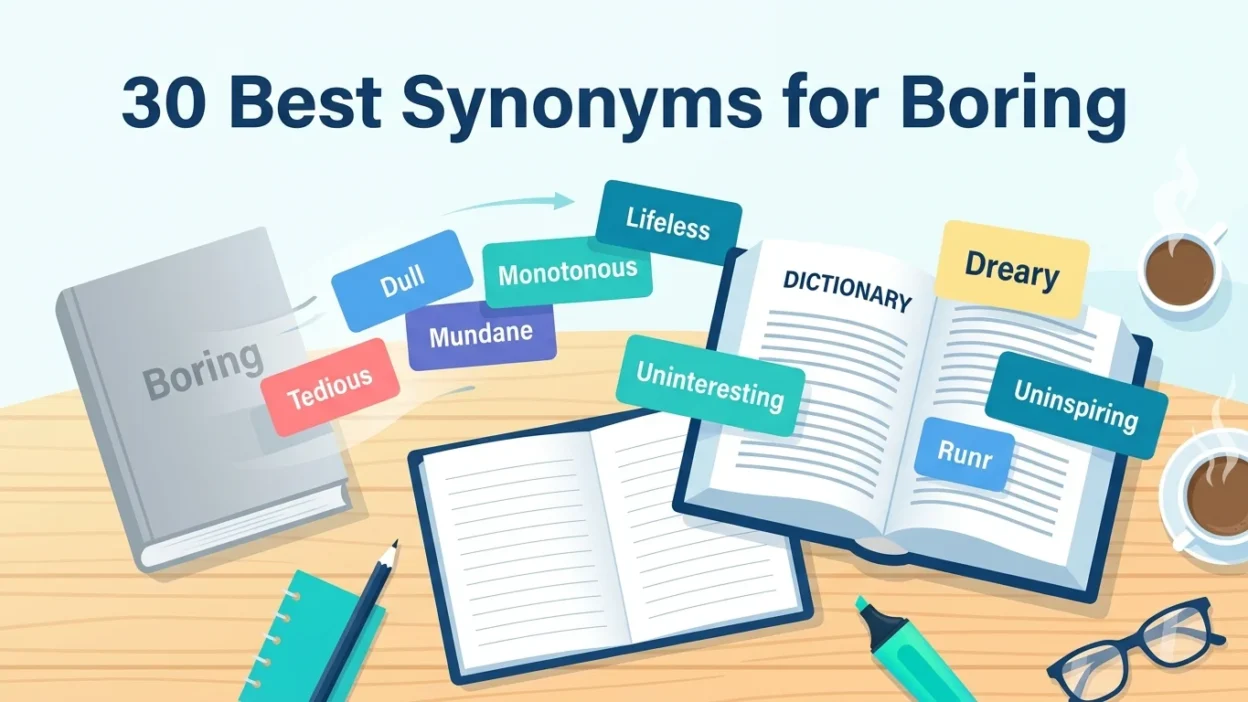
Here are 30 useful synonyms for boring:
- Dull
- Tedious
- Monotonous
- Uninteresting
- Tiresome
- Repetitive
- Mundane
- Dry
- Lifeless
- Wearisome
- Slow
- Plain
- Predictable
- Bland
- Flat
- Humdrum
- Mind-numbing
- Sleepy
- Stale
- Uneventful
- Colorless
- Dreary
- Ordinary
- Uninspiring
- Mechanical
- Spiritless
- Forgettable
- Routine
- Unexciting
- Prosaic
Synonyms for Boring with Meanings, Examples, and Usage
1. Dull
Meaning: Not interesting or exciting.
Example Sentence:
The presentation was dull, and many students lost focus.
Best Usage Context:
Ideal for describing books, lectures, movies, conversations, or events that fail to keep attention.
2. Tedious
Meaning: Too long, repetitive, and making you feel tired or impatient.
Example Sentence:
Completing all the paperwork was tedious.
Best Usage Context:
Perfect for repetitive tasks, office work, long meetings, and difficult assignments.
3. Monotonous
Meaning: Repeating the same thing over and over without variety.
Example Sentence:
The machine made a monotonous noise all day.
Best Usage Context:
Best for routines, speeches, music, jobs, or activities with little change.
4. Uninteresting
Meaning: Not able to attract attention or curiosity.
Example Sentence:
I stopped reading because the article became uninteresting.
Best Usage Context:
Suitable for books, articles, classes, and conversations.
5. Tiresome
Meaning: Making you feel tired because it continues for too long.
Example Sentence:
The long delay became tiresome for everyone.
Best Usage Context:
Useful for waiting, repeated complaints, lengthy discussions, or difficult tasks.
6. Repetitive
Meaning: Happening again and again in the same way.
Example Sentence:
The training videos became repetitive after a while.
Best Usage Context:
Great for lessons, songs, work routines, and presentations.
7. Mundane
Meaning: Ordinary and lacking excitement.
Example Sentence:
He wanted a break from his mundane daily routine.
Best Usage Context:
Best for everyday life, office work, chores, and routine activities.
8. Dry
Meaning: Lacking excitement, emotion, or entertainment.
Example Sentence:
The history lecture was informative but a little dry.
Best Usage Context:
Ideal for academic writing, lectures, reports, and presentations.
9. Lifeless
Meaning: Without energy, excitement, or emotion.
Example Sentence:
The performance felt lifeless despite the talented actors.
Best Usage Context:
Suitable for performances, writing, speeches, music, or artwork.
10. Wearisome
Meaning: Causing mental or physical tiredness because it is long or repetitive.
Example Sentence:
The wearisome journey seemed to last forever.
Best Usage Context:
Perfect for long trips, meetings, projects, or repetitive work.
11. Slow
Meaning: Moving or happening at a pace that feels uninteresting.
Example Sentence:
The movie started slowly but improved later.
Best Usage Context:
Useful for films, books, stories, games, or events.
12. Plain
Meaning: Simple and lacking interesting features.
Example Sentence:
The room looked plain without any decorations.
Best Usage Context:
Best for designs, clothing, writing, food, and visual appearance.
13. Predictable
Meaning: Easy to guess because nothing surprising happens.
Example Sentence:
The ending of the film was predictable.
Best Usage Context:
Ideal for stories, movies, television shows, and plots.
14. Bland
Meaning: Lacking excitement, flavor, personality, or originality.
Example Sentence:
The speech sounded bland and uninspiring.
Best Usage Context:
Suitable for food, writing, conversations, presentations, and personalities.
15. Flat
Meaning: Lacking energy, emotion, or excitement.
Example Sentence:
His joke fell flat because nobody laughed.
Best Usage Context:
Perfect for speeches, performances, writing, comedy, and conversations.
16. Humdrum
Meaning: Ordinary, routine, and lacking excitement.
Example Sentence:
After years of doing the same job, his daily life became humdrum.
Best Usage Context:
Ideal for routines, work, everyday life, and repeated activities.
17. Mind-Numbing
Meaning: So boring that it becomes difficult to think or stay focused.
Example Sentence:
The four-hour meeting was mind-numbing.
Best Usage Context:
Best for long meetings, repetitive work, lectures, and paperwork.
18. Sleepy
Meaning: So quiet or slow that it makes people feel sleepy.
Example Sentence:
The slow presentation created a sleepy atmosphere.
Best Usage Context:
Useful for lectures, meetings, classrooms, and quiet events.
19. Stale
Meaning: No longer fresh, exciting, or original.
Example Sentence:
The TV series became stale after several seasons.
Best Usage Context:
Perfect for ideas, entertainment, jokes, marketing, and creative work.
20. Uneventful
Meaning: Without anything exciting or memorable happening.
Example Sentence:
The journey was safe but uneventful.
Best Usage Context:
Suitable for trips, days, meetings, and everyday experiences.
21. Colorless
Meaning: Lacking excitement, personality, or vivid qualities.
Example Sentence:
The character seemed colorless compared to the others.
Best Usage Context:
Best for writing, personalities, speeches, and descriptions.
22. Dreary
Meaning: Dull, gloomy, and making people feel unhappy.
Example Sentence:
The cold, rainy weather made the afternoon feel dreary.
Best Usage Context:
Ideal for weather, places, moods, and descriptions of atmosphere.
23. Ordinary
Meaning: Common and not especially interesting.
Example Sentence:
The restaurant served ordinary food with nothing unique.
Best Usage Context:
Useful for products, events, experiences, and daily life.
24. Uninspiring
Meaning: Failing to motivate, excite, or encourage interest.
Example Sentence:
The advertisement was uninspiring and quickly forgotten.
Best Usage Context:
Perfect for speeches, marketing, presentations, and creative projects.
25. Mechanical
Meaning: Done in a routine way without emotion or creativity.
Example Sentence:
His mechanical speech sounded rehearsed.
Best Usage Context:
Suitable for writing, speeches, performances, and repetitive work.
26. Spiritless
Meaning: Without energy, enthusiasm, or excitement.
Example Sentence:
The team’s spiritless performance disappointed the fans.
Best Usage Context:
Best for sports, performances, meetings, and presentations.
27. Forgettable
Meaning: Not memorable because it lacks excitement or originality.
Example Sentence:
The movie was entertaining enough but ultimately forgettable.
Best Usage Context:
Ideal for films, books, songs, products, and events.
28. Routine
Meaning: Following the same pattern every day with little variety.
Example Sentence:
The routine office schedule became boring after a few months.
Best Usage Context:
Useful for work, school, exercise, and daily habits.
29. Unexciting
Meaning: Not causing interest, enthusiasm, or enjoyment.
Example Sentence:
The match turned out to be unexciting despite high expectations.
Best Usage Context:
Suitable for sports, events, movies, and activities.
30. Prosaic
Meaning: Ordinary and lacking imagination or excitement.
Example Sentence:
The novel began with a rather prosaic description of everyday life.
Best Usage Context:
Best for literature, formal writing, criticism, and academic discussions.
Comparison Guide: When to Use Different Synonyms
Choosing the Best Word for the Situation
| Synonym | Best Used For | Tone |
|---|---|---|
| Dull | Books, movies, lectures | Neutral |
| Tedious | Long tasks, paperwork, meetings | Slightly formal |
| Monotonous | Repetitive routines, sounds | Formal |
| Uninteresting | General situations | Neutral |
| Tiresome | Delays, repeated problems | Informal |
| Mundane | Everyday life, office work | Formal |
| Dry | Lectures, reports, academic content | Neutral |
| Bland | Food, writing, personalities | Neutral |
| Predictable | Stories, movies, plots | Neutral |
| Lifeless | Performances, speeches, writing | Descriptive |
| Dreary | Weather, places, moods | Emotional |
| Forgettable | Movies, books, songs | Critical |
| Uninspiring | Speeches, marketing, designs | Professional |
| Mind-numbing | Long meetings, repetitive work | Informal |
| Prosaic | Literature, essays, reviews | Formal |
How to Choose the Right Synonym
For Academic Writing
When writing essays, reports, or research papers, choose words that sound precise and professional.
Good options include:
- Tedious
- Monotonous
- Mundane
- Prosaic
- Uninspiring
- Predictable
For Creative Writing
Creative writing benefits from descriptive vocabulary that helps readers imagine emotions and settings.
Consider using:
- Dreary
- Lifeless
- Colorless
- Spiritless
- Forgettable
- Mind-numbing
For Everyday Conversation
Simple words are usually the most natural choice in daily conversations.
Try these:
- Dull
- Boring
- Slow
- Bland
- Uninteresting
- Routine
For Business and Professional Writing
Professional communication often requires words that describe problems without sounding too casual.
Useful choices include:
- Tedious
- Mechanical
- Mundane
- Uninspiring
- Routine
- Predictable
For Reviews and Content Creation
If you’re reviewing movies, books, games, or products, stronger descriptive words make your opinions clearer.
Excellent options include:
- Forgettable
- Mind-numbing
- Lifeless
- Bland
- Dreary
- Unexciting
Common Mistakes to Avoid
Don’t Treat Every Synonym as Identical
Although these words are similar, they describe different kinds of boredom. For example, tedious usually refers to something that feels long and repetitive, while dreary describes something that feels dull and gloomy.
Match the Tone
Choose formal words like prosaic or mundane for essays and professional writing. For casual conversations, dull or slow often sounds more natural.
Think About the Situation
Some synonyms describe emotions, while others describe activities or objects. Select the word that best matches what you’re describing.
FAQs
What is the best synonym for “boring”?
Some of the best alternatives are dull, tedious, monotonous, uninteresting, and mundane. The best choice depends on the context.
Which synonym is best for essays?
For academic writing, tedious, monotonous, prosaic, mundane, and uninspiring are excellent choices because they sound formal and precise.
Is “tedious” stronger than “boring”?
Yes. Tedious often suggests that something is not only boring but also feels unnecessarily long or repetitive.
Can I use “dull” instead of “boring”?
Yes. Dull is one of the most common and natural synonyms for boring, especially when describing books, movies, classes, or conversations.
Conclusion
Learning different synonyms for boring helps you communicate more clearly and avoid repeating the same word in your writing.
While boring is useful in everyday English, choosing a more specific synonym can better describe exactly why something lacks interest.
If you’re writing an essay, reviewing a movie, describing a routine job, or creating engaging content, words like tedious, monotonous, dull, dreary, lifeless, and uninspiring can make your writing more accurate and expressive.
As you continue building your vocabulary, practice using these synonyms in real-life situations to improve both your writing and speaking skills.

Julian Luke is a passionate grammar and language writer at Synolexes. He simplifies complex grammar rules, vocabulary, and writing concepts, helping learners improve their English communication skills with confidence.