Have you ever used the word scared too many times in your writing? While scared is a common and useful English word, repeating it can make your sentences sound repetitive.
Learning different synonyms for scared helps you describe different levels of fear, worry, and nervousness more accurately.
If you’re a student writing essays, an ESL learner building your vocabulary, a writer creating realistic characters, or a content creator looking for better word choices, understanding alternatives to scared can improve your communication.
Each synonym has its own meaning and is suitable for different situations.
In this guide, you’ll discover 30 useful synonyms for scared, along with simple meanings, example sentences, and the best situations to use each one.
By the end, you’ll know how to choose the right word for every situation.
What Does “Scared” Mean?
Simple Meaning of Scared
The word scared describes a feeling of fear, worry, or nervousness because of danger, uncertainty, or something unpleasant. A scared person often feels uncomfortable or wants to avoid the situation.
When Do We Use the Word “Scared”?
We use scared when talking about people who feel frightened, anxious, or nervous because of something real or imagined.
Examples:
- She was scared of the dark.
- The children looked scared during the storm.
- I’m scared that I might fail the exam.
Although scared is a common everyday word, using different synonyms can make your writing more descriptive and engaging.
30 Synonyms for Scared
Complete List of Synonyms
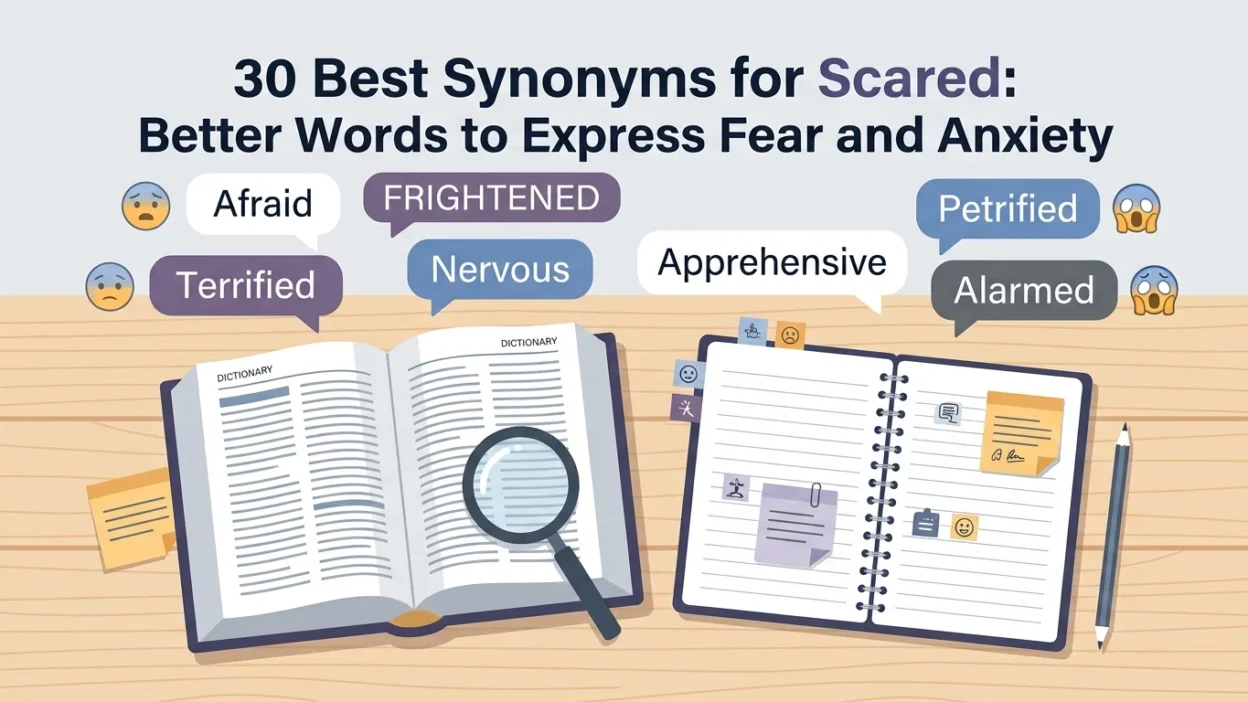
Here are 30 useful synonyms for scared:
- Afraid
- Frightened
- Terrified
- Fearful
- Nervous
- Anxious
- Alarmed
- Panicked
- Startled
- Shaken
- Worried
- Uneasy
- Timid
- Apprehensive
- Disturbed
- Petrified
- Horrified
- Intimidated
- Hesitant
- Insecure
- Jittery
- Tense
- Concerned
- Suspicious
- Cautious
- Timorous
- Trembling
- Spooked
- Terror-Stricken
- Fear-Stricken
Synonyms for Scared with Meanings, Examples, and Usage
1. Afraid
Meaning: Feeling fear or worry about something.
Example Sentence:
She is afraid of flying.
Best Usage Context:
Perfect for everyday conversations, school, and general writing.
2. Frightened
Meaning: Feeling scared because of danger or a frightening experience.
Example Sentence:
The child was frightened by the loud thunder.
Best Usage Context:
Ideal for storytelling, conversations, and descriptive writing.
3. Terrified
Meaning: Extremely scared.
Example Sentence:
He was terrified when he heard strange noises outside.
Best Usage Context:
Best for horror stories, dramatic situations, and strong emotions.
4. Fearful
Meaning: Full of fear or worry.
Example Sentence:
The villagers were fearful of the approaching storm.
Best Usage Context:
Suitable for formal writing, news, and literature.
5. Nervous
Meaning: Feeling worried or anxious about something.
Example Sentence:
I felt nervous before my first presentation.
Best Usage Context:
Perfect for exams, interviews, speeches, and daily life.
6. Anxious
Meaning: Feeling worried about what may happen.
Example Sentence:
She was anxious about the exam results.
Best Usage Context:
Useful for education, work, healthcare, and personal situations.
7. Alarmed
Meaning: Suddenly worried or frightened by unexpected news.
Example Sentence:
Residents were alarmed by the loud explosion.
Best Usage Context:
Best for news reports, emergencies, and public safety.
8. Panicked
Meaning: Extremely frightened and unable to think calmly.
Example Sentence:
The crowd panicked when the fire alarm sounded.
Best Usage Context:
Ideal for emergencies, disasters, and dramatic scenes.
9. Startled
Meaning: Suddenly surprised and slightly frightened.
Example Sentence:
She was startled by the phone ringing loudly.
Best Usage Context:
Suitable for everyday situations, storytelling, and conversations.
10. Shaken
Meaning: Emotionally upset after a frightening experience.
Example Sentence:
He was still shaken after the accident.
Best Usage Context:
Perfect for emotional events, accidents, and news stories.
11. Worried
Meaning: Feeling concerned or uneasy about something.
Example Sentence:
Parents were worried about their children’s safety.
Best Usage Context:
Useful for family, education, work, and everyday conversations.
12. Uneasy
Meaning: Feeling slightly nervous or uncomfortable.
Example Sentence:
She felt uneasy walking alone at night.
Best Usage Context:
Ideal for mystery stories, travel, and personal experiences.
13. Timid
Meaning: Naturally shy or easily frightened.
Example Sentence:
The timid puppy hid behind the chair.
Best Usage Context:
Best for describing personalities, children, and animals.
14. Apprehensive
Meaning: Feeling nervous about something that may happen.
Example Sentence:
He felt apprehensive before the surgery.
Best Usage Context:
Suitable for formal writing, healthcare, education, and business.
15. Disturbed
Meaning: Emotionally troubled or upset by something unpleasant.
Example Sentence:
She was disturbed by what she saw on the news.
Best Usage Context:
Perfect for emotional situations, news reports, and serious discussions.
16. Petrified
Meaning: Extremely frightened and unable to move or think clearly.
Example Sentence:
She was petrified when she heard footsteps behind her.
Best Usage Context:
Perfect for horror stories, emergencies, and dramatic situations.
17. Horrified
Meaning: Extremely shocked and frightened by something terrible.
Example Sentence:
The family was horrified by the accident.
Best Usage Context:
Best for news, emotional events, and serious situations.
18. Intimidated
Meaning: Feeling scared because someone or something seems powerful.
Example Sentence:
He felt intimidated during his first job interview.
Best Usage Context:
Suitable for workplaces, education, sports, and social situations.
19. Hesitant
Meaning: Unsure or unwilling because of fear or doubt.
Example Sentence:
She was hesitant to speak in front of the class.
Best Usage Context:
Ideal for decision-making, learning, interviews, and daily life.
20. Insecure
Meaning: Lacking confidence and feeling uncertain.
Example Sentence:
He felt insecure about his English speaking skills.
Best Usage Context:
Perfect for personal growth, education, careers, and relationships.
21. Jittery
Meaning: Nervous and unable to relax.
Example Sentence:
I felt jittery before the final exam.
Best Usage Context:
Useful for tests, interviews, performances, and competitions.
22. Tense
Meaning: Feeling nervous, stressed, or worried.
Example Sentence:
Everyone became tense before the announcement.
Best Usage Context:
Best for meetings, sports, exams, and stressful situations.
23. Concerned
Meaning: Worried about someone or something.
Example Sentence:
Doctors were concerned about the patient’s condition.
Best Usage Context:
Suitable for healthcare, family, education, and work.
24. Suspicious
Meaning: Feeling that something may be wrong or dangerous.
Example Sentence:
She became suspicious after receiving the strange message.
Best Usage Context:
Perfect for mystery stories, crime, and investigations.
25. Cautious
Meaning: Careful because of possible danger or problems.
Example Sentence:
The hikers were cautious while crossing the river.
Best Usage Context:
Useful for travel, safety, business, and outdoor activities.
26. Timorous
Meaning: Easily frightened or lacking courage.
Example Sentence:
The timorous child stayed close to his parents.
Best Usage Context:
Best for literature, formal writing, and character descriptions.
27. Trembling
Meaning: Shaking because of fear or nervousness.
Example Sentence:
Her trembling hands showed how frightened she was.
Best Usage Context:
Ideal for storytelling, emotional scenes, and descriptive writing.
28. Spooked
Meaning: Suddenly frightened or startled.
Example Sentence:
The loud noise spooked the horses.
Best Usage Context:
Suitable for informal conversations, storytelling, and animals.
29. Terror-Stricken
Meaning: Filled with extreme fear.
Example Sentence:
The villagers were terror-stricken during the earthquake.
Best Usage Context:
Perfect for disasters, horror stories, and dramatic writing.
30. Fear-Stricken
Meaning: Overcome by intense fear.
Example Sentence:
The passengers looked fear-stricken during the storm.
Best Usage Context:
Best for novels, news reports, and emotional storytelling.
Comparison Guide: When to Use Different Synonyms
Choosing the Best Word for the Situation
| Synonym | Best Used For | Tone |
|---|---|---|
| Afraid | Everyday conversations | Neutral |
| Frightened | General fear | Common |
| Terrified | Extreme fear | Strong |
| Fearful | Formal writing | Formal |
| Nervous | Exams, interviews | Casual |
| Anxious | Future worries | Professional |
| Alarmed | Emergencies | Serious |
| Panicked | Crisis situations | Intense |
| Uneasy | Mild discomfort | Neutral |
| Apprehensive | Formal situations | Professional |
| Petrified | Horror, dramatic scenes | Very Strong |
| Intimidated | Work, school | Neutral |
| Cautious | Safety and travel | Positive |
| Spooked | Informal conversations | Casual |
| Fear-Stricken | Literature and news | Dramatic |
How to Choose the Right Synonym
For Academic Writing
Formal writing benefits from words that sound precise and professional.
Good choices include:
- Fearful
- Apprehensive
- Concerned
- Alarmed
- Disturbed
- Intimidated
For Creative Writing
Stories become more vivid when fear is described accurately.
Try these words:
- Terrified
- Petrified
- Fear-Stricken
- Terror-Stricken
- Horrified
- Trembling
For Everyday Conversation
Simple words usually sound the most natural in daily speech.
Consider using:
- Afraid
- Nervous
- Worried
- Uneasy
- Hesitant
- Scared
For Business and Professional Writing
Professional communication often requires balanced language.
Useful options include:
- Concerned
- Apprehensive
- Cautious
- Tense
- Alarmed
- Intimidated
For Horror and Suspense Writing
Choose stronger words to build tension and emotion.
Excellent choices are:
- Petrified
- Terrified
- Horrified
- Fear-Stricken
- Terror-Stricken
- Panicked
Common Mistakes to Avoid
Don’t Use Every Synonym Interchangeably
Although these words all relate to fear, they describe different levels of emotion. For example, nervous usually refers to mild worry, while petrified describes extreme fear.
Match the Tone
Formal writing works well with words like apprehensive, fearful, or concerned, while everyday conversations usually sound more natural with afraid or nervous.
Consider the Situation
Choose the synonym that fits the context. A student may feel nervous before an exam, while a person in danger may feel terrified or panic-stricken.
FAQs
What is the best synonym for “scared”?
Some of the best synonyms are afraid, frightened, terrified, nervous, and anxious. The best choice depends on how intense the fear is.
Which synonym is best for essays?
For academic writing, fearful, apprehensive, concerned, alarmed, and disturbed are excellent choices because they sound formal and precise.
Is “terrified” stronger than “scared”?
Yes. Terrified describes a much stronger level of fear than the general word scared.
Can I use “nervous” instead of “scared”?
Yes, in some situations. Nervous is a better choice when talking about mild fear, anxiety, or worry rather than extreme fear.
Conclusion
Learning different synonyms for scared helps you describe fear, worry, and anxiety more accurately.
While scared is a useful everyday word, choosing a more specific synonym allows you to express different emotions with greater precision.
If you’re writing an essay, creating a suspenseful story, preparing a presentation, or having an everyday conversation, words like afraid, terrified, apprehensive, nervous, petrified, and fear-stricken can make your writing more vivid and engaging.
Practice using these alternatives in different contexts to strengthen your English vocabulary and become a more confident writer and speaker.