Have you ever used the word rude several times in your writing? While rude is a common English word, repeating it too often can make your sentences sound dull.
Learning different synonyms for rude helps you describe impolite, disrespectful, or offensive behavior more accurately.
If you’re a student writing essays, an ESL learner improving your vocabulary, a writer developing realistic characters, or a content creator looking for stronger word choices, understanding alternatives to rude can make your writing clearer and more engaging.
Each synonym has its own meaning and is best suited for different situations.
In this guide, you’ll discover 30 useful synonyms for rude, along with simple meanings, example sentences, and the best situations to use each one.
By the end, you’ll know which word best fits your writing.
What Does “Rude” Mean?
Simple Meaning of Rude
The word rude describes someone who behaves in an impolite, disrespectful, or inconsiderate way. A rude person may ignore good manners, speak harshly, or offend others through their words or actions.
When Do We Use the Word “Rude”?
We use rude when talking about behavior that is not polite or respectful.
Examples:
- It was rude to interrupt the speaker.
- He made a rude comment during the meeting.
- Don’t be rude to your classmates.
Although rude is a useful everyday word, using different synonyms can make your writing more varied and expressive.
30 Synonyms for Rude
Complete List of Synonyms
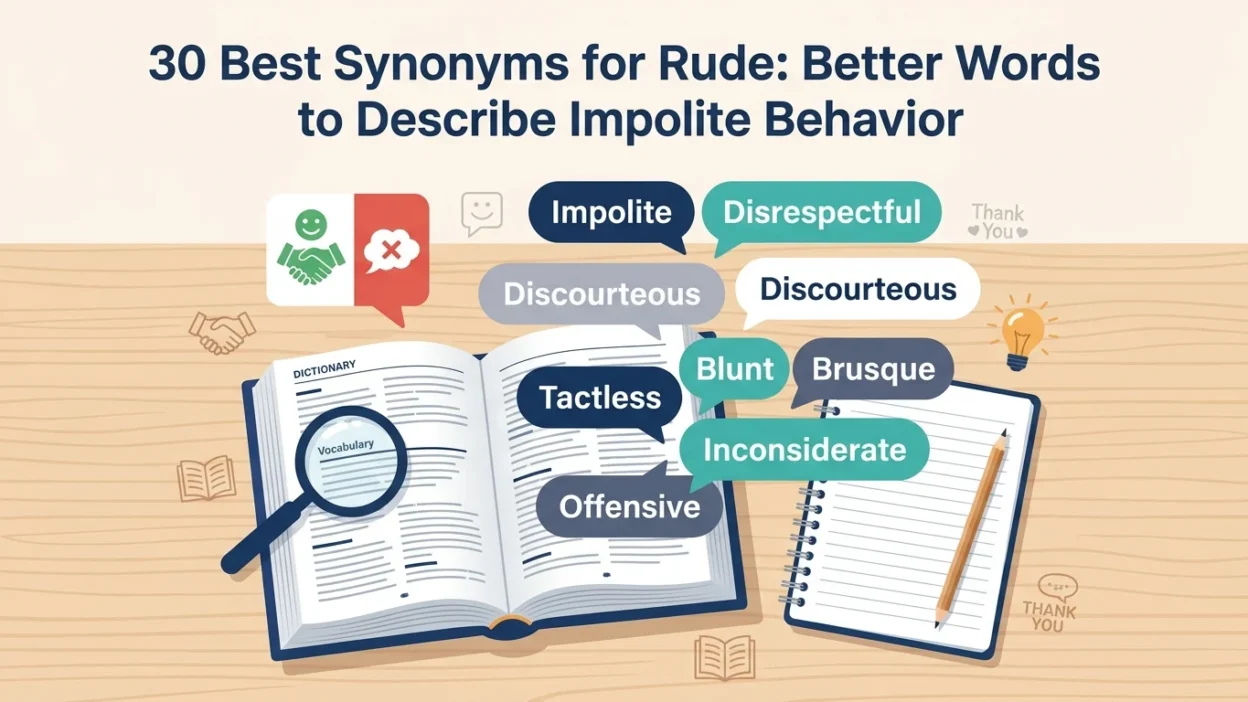
Here are 30 useful synonyms for rude:
- Impolite
- Disrespectful
- Uncivil
- Discourteous
- Abrupt
- Offensive
- Insulting
- Crude
- Blunt
- Harsh
- Mean
- Thoughtless
- Inconsiderate
- Ill-Mannered
- Unkind
- Insolent
- Arrogant
- Boorish
- Coarse
- Impudent
- Cheeky
- Snobbish
- Tactless
- Curt
- Brusque
- Condescending
- Obnoxious
- Vulgar
- Unpleasant
- Churlish
Synonyms for Rude with Meanings, Examples, and Usage
1. Impolite
Meaning: Not showing good manners.
Example Sentence:
It is impolite to answer your phone during dinner.
Best Usage Context:
Perfect for everyday conversations, education, and etiquette.
2. Disrespectful
Meaning: Showing a lack of respect for someone.
Example Sentence:
The student was disrespectful to the teacher.
Best Usage Context:
Ideal for schools, workplaces, and family discussions.
3. Uncivil
Meaning: Not polite or courteous.
Example Sentence:
The debate became uncivil after several personal attacks.
Best Usage Context:
Best for formal writing, news, and public discussions.
4. Discourteous
Meaning: Showing bad manners or lacking politeness.
Example Sentence:
The customer made a discourteous remark to the cashier.
Best Usage Context:
Suitable for business communication, customer service, and formal writing.
5. Abrupt
Meaning: Speaking or acting suddenly without politeness.
Example Sentence:
His abrupt reply surprised everyone.
Best Usage Context:
Useful for workplace communication, emails, and conversations.
6. Offensive
Meaning: Causing hurt feelings or upsetting others.
Example Sentence:
Some people found the joke offensive.
Best Usage Context:
Perfect for media, discussions, and social situations.
7. Insulting
Meaning: Saying or doing something that hurts another person’s feelings.
Example Sentence:
Her insulting remarks upset the whole team.
Best Usage Context:
Best for arguments, reviews, and conflict resolution.
8. Crude
Meaning: Rude because of bad language or poor manners.
Example Sentence:
The comedian avoided using crude jokes.
Best Usage Context:
Ideal for entertainment, conversations, and writing reviews.
9. Blunt
Meaning: Very direct, sometimes sounding rude.
Example Sentence:
He was blunt but honest in his feedback.
Best Usage Context:
Suitable for business, leadership, and communication.
10. Harsh
Meaning: Unkind or severe in words or actions.
Example Sentence:
The coach gave harsh criticism after the game.
Best Usage Context:
Perfect for education, workplaces, and personal relationships.
11. Mean
Meaning: Intentionally unkind or hurtful.
Example Sentence:
The children were mean to the new student.
Best Usage Context:
Best for everyday conversations, schools, and storytelling.
12. Thoughtless
Meaning: Not thinking about how your actions affect others.
Example Sentence:
It was thoughtless to forget her birthday.
Best Usage Context:
Useful for relationships, family, and workplace situations.
13. Inconsiderate
Meaning: Not caring about other people’s needs or feelings.
Example Sentence:
Playing loud music late at night is inconsiderate.
Best Usage Context:
Ideal for community living, workplaces, and social behavior.
14. Ill-Mannered
Meaning: Having bad manners.
Example Sentence:
The ill-mannered guest ignored the host’s greetings.
Best Usage Context:
Suitable for etiquette, education, and character descriptions.
15. Unkind
Meaning: Not caring or friendly toward others.
Example Sentence:
His unkind words made her feel sad.
Best Usage Context:
Perfect for family, friendships, schools, and emotional writing.
16. Insolent
Meaning: Showing disrespect in a bold or arrogant way.
Example Sentence:
The employee’s insolent reply surprised the manager.
Best Usage Context:
Perfect for formal writing, literature, workplaces, and education.
17. Arrogant
Meaning: Acting as if you are better than other people.
Example Sentence:
His arrogant attitude made teamwork difficult.
Best Usage Context:
Best for business, leadership, character descriptions, and everyday writing.
18. Boorish
Meaning: Rough, insensitive, and lacking good manners.
Example Sentence:
The guest’s boorish behavior embarrassed everyone.
Best Usage Context:
Suitable for literature, formal writing, and character descriptions.
19. Coarse
Meaning: Rude because of offensive language or behavior.
Example Sentence:
The movie contained some coarse humor.
Best Usage Context:
Ideal for entertainment reviews, literature, and conversations.
20. Impudent
Meaning: Boldly disrespectful or lacking proper respect.
Example Sentence:
The student’s impudent remarks shocked the class.
Best Usage Context:
Perfect for education, literature, and formal writing.
21. Cheeky
Meaning: Slightly rude in a playful or humorous way.
Example Sentence:
The child gave a cheeky smile after making the joke.
Best Usage Context:
Useful for British English, family conversations, and storytelling.
22. Snobbish
Meaning: Acting as though you are more important than others.
Example Sentence:
She seemed snobbish during the event.
Best Usage Context:
Best for social situations, fiction, and personality descriptions.
23. Tactless
Meaning: Speaking without considering other people’s feelings.
Example Sentence:
His tactless comment upset several coworkers.
Best Usage Context:
Suitable for workplaces, relationships, and communication.
24. Curt
Meaning: Rudely brief when speaking.
Example Sentence:
She gave a curt answer and walked away.
Best Usage Context:
Ideal for business communication, emails, and dialogue.
25. Brusque
Meaning: Direct and unfriendly in speech or behavior.
Example Sentence:
The receptionist sounded brusque on the phone.
Best Usage Context:
Perfect for professional writing, customer service, and literature.
26. Condescending
Meaning: Talking to others as if they are less intelligent.
Example Sentence:
His condescending tone frustrated the team.
Best Usage Context:
Useful for workplace communication, education, and leadership.
27. Obnoxious
Meaning: Extremely unpleasant or annoying.
Example Sentence:
The obnoxious customer shouted at the staff.
Best Usage Context:
Best for storytelling, reviews, and everyday conversation.
28. Vulgar
Meaning: Rude because of offensive language or poor behavior.
Example Sentence:
The audience disliked the comedian’s vulgar jokes.
Best Usage Context:
Suitable for entertainment, literature, and formal discussions.
29. Unpleasant
Meaning: Not nice to be around because of attitude or behavior.
Example Sentence:
The meeting became unpleasant after the argument.
Best Usage Context:
Perfect for general writing, workplace situations, and conversations.
30. Churlish
Meaning: Rudely unfriendly and lacking politeness.
Example Sentence:
His churlish behavior disappointed everyone.
Best Usage Context:
Best for literature, formal writing, and advanced vocabulary.
Comparison Guide: When to Use Different Synonyms
Choosing the Best Word for the Situation
| Synonym | Best Used For | Tone |
|---|---|---|
| Impolite | Everyday conversations | Neutral |
| Disrespectful | School, workplace | Serious |
| Discourteous | Business, formal writing | Formal |
| Abrupt | Emails, conversations | Neutral |
| Offensive | Sensitive topics | Strong |
| Insulting | Arguments, criticism | Strong |
| Blunt | Honest feedback | Neutral |
| Harsh | Reviews, coaching | Direct |
| Inconsiderate | Social behavior | Neutral |
| Unkind | Family, friendships | Soft |
| Tactless | Communication | Professional |
| Brusque | Workplace dialogue | Formal |
| Condescending | Leadership, business | Professional |
| Obnoxious | Informal conversation | Strong |
| Churlish | Literature, formal writing | Advanced |
How to Choose the Right Synonym
For Academic Writing
Formal essays benefit from precise vocabulary.
Good choices include:
- Discourteous
- Uncivil
- Tactless
- Insolent
- Brusque
- Churlish
For Creative Writing
Choose words that match your character’s personality.
Try these words:
- Boorish
- Arrogant
- Obnoxious
- Coarse
- Impudent
- Vulgar
For Everyday Conversation
Simple words usually sound the most natural.
Consider using:
- Impolite
- Rude
- Mean
- Unkind
- Thoughtless
- Inconsiderate
For Business and Professional Writing
Professional communication should remain respectful and objective.
Useful options include:
- Abrupt
- Tactless
- Discourteous
- Brusque
- Condescending
- Disrespectful
For Literature and Formal Writing
Use richer vocabulary to create more vivid descriptions.
Excellent choices are:
- Insolent
- Boorish
- Churlish
- Coarse
- Impudent
- Uncivil
Common Mistakes to Avoid
Don’t Use Every Synonym Interchangeably
Although these words all describe rude behavior, they emphasize different qualities. For example, blunt often means direct rather than intentionally impolite, while obnoxious describes someone who is extremely unpleasant.
Match the Tone
Formal writing sounds stronger with words like discourteous, insolent, or churlish, while everyday conversations usually work better with impolite, mean, or unkind.
Consider the Situation
Choose the synonym that best matches the behavior. A person may be tactless by accident, while someone who is insulting intentionally hurts another person’s feelings.
FAQs
What is the best synonym for “rude”?
Some of the best synonyms are impolite, disrespectful, discourteous, tactless, and insulting. The best choice depends on the situation.
Which synonym is best for essays?
For academic writing, discourteous, uncivil, insolent, tactless, and brusque are excellent choices because they sound formal and precise.
Is “blunt” always the same as “rude”?
No. Blunt means very direct. Sometimes people see blunt comments as rude, but they may simply be honest rather than intentionally impolite.
Can I use “impolite” instead of “rude”?
Yes. Impolite is one of the closest and most common synonyms for rude and is appropriate in most situations.
Conclusion
Learning different synonyms for rude helps you describe impolite, disrespectful, or inconsiderate behavior with greater accuracy.
While rude is a useful everyday word, choosing a more specific synonym makes your writing clearer, more engaging, and better suited to different situations.
If you’re writing an essay, creating realistic dialogue, preparing professional content, or expanding your English vocabulary, words like impolite, disrespectful, tactless, discourteous, brusque, and insulting can help you express ideas more effectively.
Practice using these alternatives in different contexts to become a more confident English writer and speaker.