Have you ever used the word calm repeatedly in your writing? While calm is a simple and useful English word, using it too often can make your sentences feel repetitive.
Learning different synonyms for calm helps you describe peaceful feelings, quiet places, and composed people with greater accuracy.
Whether you’re a student writing essays, an ESL learner expanding your vocabulary, a writer creating vivid descriptions, or a content creator looking for stronger word choices, understanding alternatives to calm can improve your communication. Each synonym has its own meaning and works best in different situations.
In this guide, you’ll discover 30 useful synonyms for calm, along with simple meanings, example sentences, and the best situations to use each one. By the end, you’ll have a richer vocabulary and know exactly which word to choose.
What Does “Calm” Mean?
Simple Meaning of Calm
The word calm describes a state of being peaceful, quiet, relaxed, and free from stress, anger, or excitement. It can describe people, emotions, weather, places, or situations.
When Do We Use the Word “Calm”?
We use calm when talking about someone who stays relaxed, a peaceful environment, or a situation without conflict or disturbance.
Examples:
- She remained calm during the interview.
- The sea was calm this morning.
- We had a calm discussion about the problem.
Although calm is a common word, using different synonyms makes your writing more natural and expressive.
30 Synonyms for Calm
Complete List of Synonyms
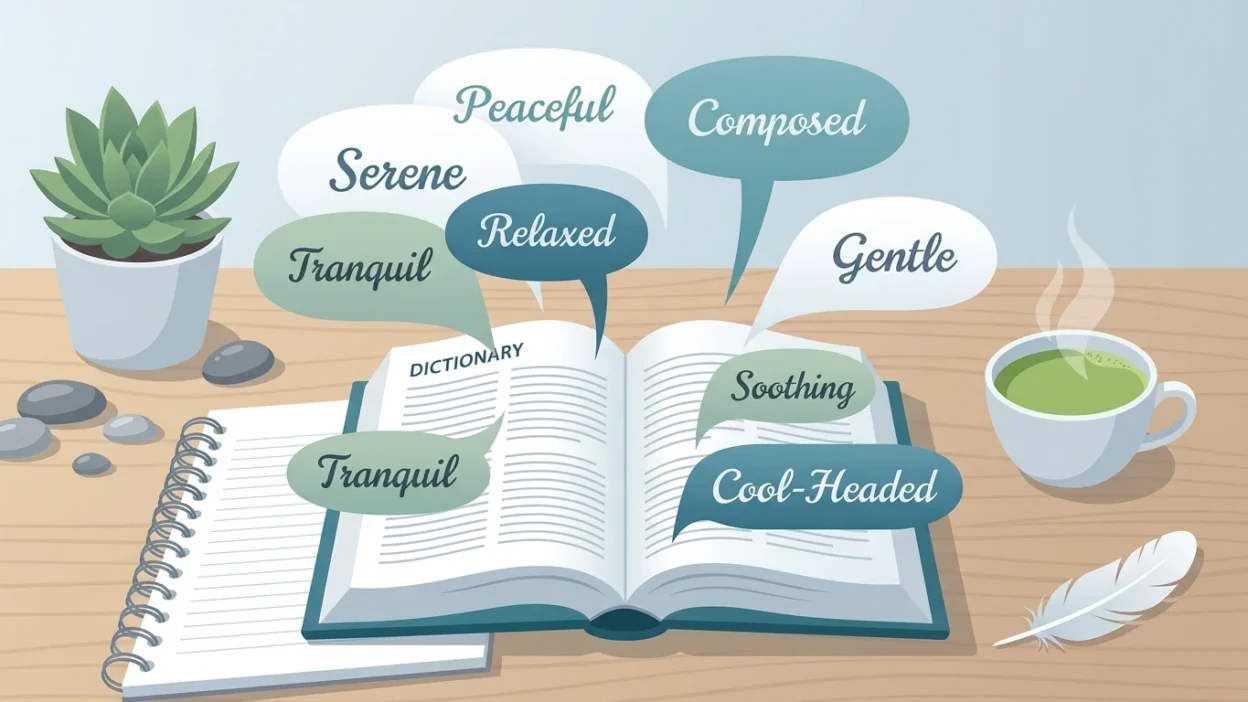
Here are 30 useful synonyms for calm:
- Peaceful
- Quiet
- Serene
- Tranquil
- Relaxed
- Composed
- Collected
- Untroubled
- Placid
- Gentle
- Still
- Cool
- Patient
- Mild
- Restful
- Soothing
- Stable
- Balanced
- Unruffled
- At Ease
- Harmonious
- Settled
- Peaceable
- Undisturbed
- Soft
- Reassuring
- Even-Tempered
- Cool-Headed
- Self-Controlled
- Imperturbable
Synonyms for Calm with Meanings, Examples, and Usage
1. Peaceful
Meaning: Free from conflict, noise, or stress.
Example Sentence:
We enjoyed a peaceful walk through the park.
Best Usage Context:
Perfect for places, lifestyles, relationships, and quiet moments.
2. Quiet
Meaning: Making little or no noise.
Example Sentence:
The library remained quiet throughout the afternoon.
Best Usage Context:
Ideal for places, rooms, neighborhoods, and peaceful environments.
3. Serene
Meaning: Calm, peaceful, and free from worry.
Example Sentence:
She had a serene smile despite the challenges.
Best Usage Context:
Best for landscapes, people, emotions, and relaxing settings.
4. Tranquil
Meaning: Very peaceful and undisturbed.
Example Sentence:
The lake looked tranquil at sunrise.
Best Usage Context:
Suitable for nature, vacations, gardens, and peaceful locations.
5. Relaxed
Meaning: Free from tension or anxiety.
Example Sentence:
After the holiday, everyone felt relaxed.
Best Usage Context:
Great for people, vacations, conversations, and social situations.
6. Composed
Meaning: Calm and in control of your emotions.
Example Sentence:
The pilot remained composed during the emergency.
Best Usage Context:
Perfect for stressful situations, leadership, interviews, and public speaking.
7. Collected
Meaning: Calm, organized, and emotionally controlled.
Example Sentence:
She stayed calm and collected throughout the competition.
Best Usage Context:
Ideal for professionals, leaders, athletes, and emergencies.
8. Untroubled
Meaning: Not worried or disturbed.
Example Sentence:
He seemed untroubled despite the difficult news.
Best Usage Context:
Useful for emotions, personalities, and peaceful situations.
9. Placid
Meaning: Calm and not easily upset.
Example Sentence:
The horse had a placid nature.
Best Usage Context:
Best for animals, people, lakes, and quiet environments.
10. Gentle
Meaning: Kind, calm, and not harsh.
Example Sentence:
She spoke in a gentle voice.
Best Usage Context:
Suitable for people, conversations, parenting, and teaching.
11. Still
Meaning: Completely quiet without movement.
Example Sentence:
The forest was still before sunrise.
Best Usage Context:
Perfect for weather, nature, photography, and peaceful scenes.
12. Cool
Meaning: Remaining calm and not becoming angry or nervous.
Example Sentence:
He stayed cool during the difficult interview.
Best Usage Context:
Ideal for stressful situations, sports, business, and leadership.
13. Patient
Meaning: Calm while waiting or dealing with difficulties.
Example Sentence:
The teacher was patient with every student.
Best Usage Context:
Useful for education, parenting, customer service, and teamwork.
14. Mild
Meaning: Gentle, calm, and not extreme.
Example Sentence:
The weather remained mild throughout the week.
Best Usage Context:
Best for weather, personalities, opinions, and behavior.
15. Restful
Meaning: Helping you relax and feel refreshed.
Example Sentence:
We spent a restful weekend in the countryside.
Best Usage Context:
Perfect for vacations, bedrooms, hotels, spas, and relaxing experiences.
16. Soothing
Meaning: Helping someone feel calm, relaxed, or comforted.
Example Sentence:
The sound of the rain was soothing after a long day.
Best Usage Context:
Perfect for music, voices, nature, spa experiences, and relaxing environments.
17. Stable
Meaning: Calm, steady, and not likely to change suddenly.
Example Sentence:
She remained emotionally stable during the difficult situation.
Best Usage Context:
Best for emotions, finances, relationships, and work environments.
18. Balanced
Meaning: Emotionally steady and able to think clearly.
Example Sentence:
He made a balanced decision after considering every option.
Best Usage Context:
Ideal for decision-making, leadership, personal growth, and discussions.
19. Unruffled
Meaning: Staying calm and not becoming upset or worried.
Example Sentence:
She remained unruffled despite the unexpected delay.
Best Usage Context:
Suitable for stressful situations, business, interviews, and emergencies.
20. At Ease
Meaning: Feeling comfortable, relaxed, and free from worry.
Example Sentence:
The friendly staff made us feel at ease immediately.
Best Usage Context:
Perfect for conversations, social events, workplaces, and hospitality.
21. Harmonious
Meaning: Peaceful and working well together without conflict.
Example Sentence:
The team maintained a harmonious working relationship.
Best Usage Context:
Best for families, workplaces, communities, and music.
22. Settled
Meaning: Calm because everything has become stable or organized.
Example Sentence:
After a few weeks, life became more settled.
Best Usage Context:
Useful for homes, families, work, and personal life.
23. Peaceable
Meaning: Preferring peace and avoiding conflict.
Example Sentence:
The villagers were known for their peaceable nature.
Best Usage Context:
Ideal for people, communities, diplomacy, and relationships.
24. Undisturbed
Meaning: Not interrupted, bothered, or affected.
Example Sentence:
The children slept peacefully, completely undisturbed.
Best Usage Context:
Suitable for sleep, nature, libraries, study time, and quiet places.
25. Soft
Meaning: Gentle, calm, and pleasant.
Example Sentence:
She spoke in a soft and comforting voice.
Best Usage Context:
Perfect for voices, music, lighting, colors, and gentle behavior.
26. Reassuring
Meaning: Making someone feel less worried or afraid.
Example Sentence:
The doctor’s reassuring words eased everyone’s fears.
Best Usage Context:
Best for healthcare, customer service, parenting, teaching, and leadership.
27. Even-Tempered
Meaning: Calm and not easily angered.
Example Sentence:
He is known for his even-tempered personality.
Best Usage Context:
Useful for personalities, leadership, teamwork, and relationships.
28. Cool-Headed
Meaning: Able to stay calm and think clearly under pressure.
Example Sentence:
The firefighter remained cool-headed throughout the rescue.
Best Usage Context:
Ideal for emergencies, business, sports, and leadership.
29. Self-Controlled
Meaning: Able to manage emotions and reactions.
Example Sentence:
She stayed self-controlled during the heated debate.
Best Usage Context:
Perfect for conflicts, public speaking, negotiations, and professional situations.
30. Imperturbable
Meaning: Extremely calm and impossible to upset.
Example Sentence:
The experienced judge remained imperturbable throughout the trial.
Best Usage Context:
Best for formal writing, literature, leadership, and highly stressful situations.
Comparison Guide: When to Use Different Synonyms
Choosing the Best Word for the Situation
| Synonym | Best Used For | Tone |
|---|---|---|
| Peaceful | Nature, relationships, lifestyles | Positive |
| Quiet | Places, rooms, neighborhoods | Neutral |
| Serene | Landscapes, emotions, people | Elegant |
| Tranquil | Lakes, gardens, vacations | Descriptive |
| Relaxed | Daily life, holidays, conversations | Casual |
| Composed | Interviews, emergencies, leadership | Professional |
| Gentle | Parenting, teaching, communication | Warm |
| Patient | Waiting, education, customer service | Positive |
| Soothing | Music, voices, nature | Comforting |
| Stable | Emotions, finances, work | Professional |
| Harmonious | Families, teams, communities | Positive |
| Reassuring | Healthcare, leadership, support | Encouraging |
| Cool-Headed | Emergencies, business, sports | Strong |
| Self-Controlled | Debates, negotiations, public speaking | Formal |
| Imperturbable | Literature, leadership, formal writing | Advanced |
How to Choose the Right Synonym
For Academic Writing
If you’re writing essays, reports, or research papers, choose words that sound precise and professional.
Good choices include:
- Composed
- Stable
- Balanced
- Harmonious
- Deliberate
- Imperturbable
For Creative Writing
Creative writing often benefits from descriptive words that help readers imagine peaceful settings and emotions.
Try these words:
- Serene
- Tranquil
- Peaceful
- Placid
- Gentle
- Soothing
For Everyday Conversation
Simple, familiar words sound the most natural in daily speech.
Consider using:
- Calm
- Relaxed
- Quiet
- Patient
- Cool
- At Ease
For Business and Professional Writing
Professional communication often requires words that describe emotional control and clear thinking.
Useful options include:
- Composed
- Stable
- Focused
- Balanced
- Cool-Headed
- Self-Controlled
For Wellness and Mindfulness Content
If you’re writing about mental health, meditation, or relaxation, choose words that create a peaceful feeling.
Excellent choices are:
- Serene
- Tranquil
- Peaceful
- Soothing
- Restful
- Harmonious
Common Mistakes to Avoid
Don’t Use Every Synonym Interchangeably
Although these words all relate to being calm, they have different meanings. For example, serene often describes peaceful beauty, while composed refers to emotional control during stressful situations.
Match the Tone
Formal writing works well with words like imperturbable or composed, while casual conversations usually sound more natural with relaxed or calm.
Consider the Context
Choose a synonym that fits what you’re describing. A tranquil lake is natural, while a cool-headed manager is a better description of someone handling pressure.
FAQs
What is the best synonym for “calm”?
Some of the best synonyms are peaceful, serene, tranquil, relaxed, and composed. The best choice depends on the context.
Which synonym is best for essays?
For academic writing, composed, balanced, stable, harmonious, and imperturbable are excellent choices because they sound professional and precise.
Is “serene” stronger than “calm”?
Not necessarily. Serene usually suggests a deeper sense of peace and beauty, while calm is a more general word that fits many everyday situations.
Can I use “composed” instead of “calm”?
Yes. Composed is a great synonym when describing someone who remains emotionally controlled during stressful or challenging situations.
Conclusion
Learning different synonyms for calm helps you communicate with greater clarity and variety.
While calm is an excellent everyday word, choosing a more specific synonym allows you to describe emotions, people, and peaceful settings more accurately.
If you’re writing an essay, creating a story, describing a relaxing vacation, or talking about emotional control, words like serene, tranquil, composed, peaceful, cool-headed, and soothing can make your writing more expressive and engaging.
As you continue expanding your vocabulary, practice using these alternatives in different situations to become a more confident English speaker and writer.