Have you ever used the word tired repeatedly in your writing? While tired is a common and useful English word, repeating it too often can make your sentences sound repetitive.
Learning different synonyms for tired helps you describe different levels of fatigue, low energy, and exhaustion more accurately.
If you’re a student writing an essay, an ESL learner expanding your vocabulary, a writer creating realistic characters, or a content creator looking for more expressive language, understanding alternatives to tired can improve your communication. Each synonym has its own meaning and works best in different situations.
In this guide, you’ll discover 30 useful synonyms for tired, along with simple meanings, example sentences, and the best situations to use each one. By the end, you’ll know how to choose the right word to match your message.
What Does “Tired” Mean?
Simple Meaning of Tired
The word tired describes a feeling of needing rest because of physical work, mental effort, lack of sleep, or stress. It can also describe someone who feels bored with something after experiencing it for a long time.
When Do We Use the Word “Tired”?
We use tired when talking about physical exhaustion, mental fatigue, emotional stress, or losing interest in something.
Examples:
- I’m tired after working all day.
- She looked tired because she stayed up late.
- We are tired of hearing the same excuse.
Although tired is an everyday word, using different synonyms can make your writing more natural and descriptive.
30 Synonyms for Tired
Complete List of Synonyms
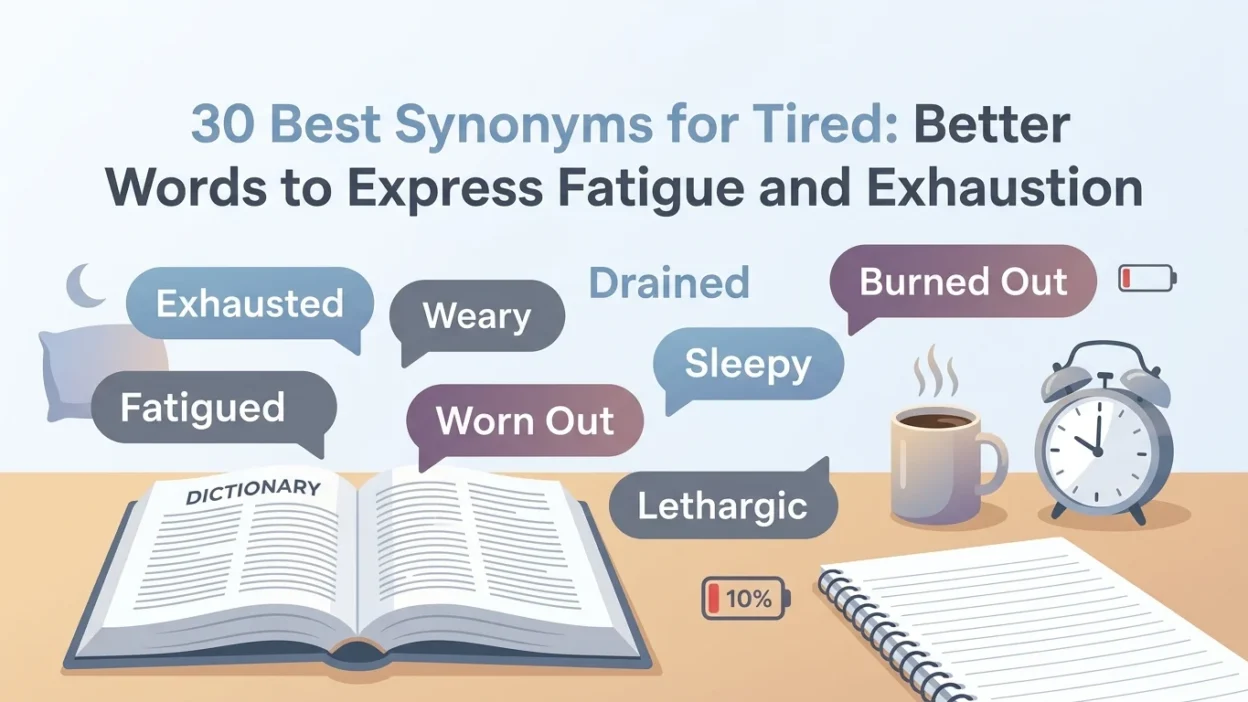
Here are 30 useful synonyms for tired:
- Exhausted
- Weary
- Fatigued
- Worn Out
- Drained
- Sleepy
- Drowsy
- Burned Out
- Depleted
- Lethargic
- Faint
- Weak
- Sluggish
- Bored
- Fed Up
- Run-Down
- Spent
- Beat
- Wiped Out
- Groggy
- Listless
- Overworked
- Frazzled
- Overwhelmed
- Wearied
- Enervated
- Pooped
- Dog-Tired
- Lifeless
- Spiritless
Synonyms for Tired with Meanings, Examples, and Usage
1. Exhausted
Meaning: Extremely tired and needing rest.
Example Sentence:
After the marathon, everyone felt exhausted.
Best Usage Context:
Perfect for physical activity, long workdays, and intense effort.
2. Weary
Meaning: Very tired in body or mind.
Example Sentence:
The travelers looked weary after the long journey.
Best Usage Context:
Ideal for literature, travel, emotional stress, and formal writing.
3. Fatigued
Meaning: Feeling physically or mentally tired.
Example Sentence:
The nurse felt fatigued after a busy shift.
Best Usage Context:
Best for healthcare, work, fitness, and academic writing.
4. Worn Out
Meaning: Completely tired from too much activity.
Example Sentence:
The children were worn out after playing outside all afternoon.
Best Usage Context:
Suitable for everyday conversations and informal writing.
5. Drained
Meaning: Feeling completely without energy.
Example Sentence:
She felt emotionally drained after the difficult conversation.
Best Usage Context:
Perfect for emotional stress, work, and challenging situations.
6. Sleepy
Meaning: Ready to fall asleep.
Example Sentence:
The baby became sleepy after drinking milk.
Best Usage Context:
Best for bedtime, children, and everyday conversations.
7. Drowsy
Meaning: Feeling sleepy and struggling to stay awake.
Example Sentence:
The medicine made him feel drowsy.
Best Usage Context:
Useful for health, medication, driving safety, and bedtime.
8. Burned Out
Meaning: Extremely tired because of long-term stress or overwork.
Example Sentence:
Many employees feel burned out after working overtime for months.
Best Usage Context:
Ideal for workplaces, careers, education, and mental health.
9. Depleted
Meaning: Having very little energy left.
Example Sentence:
After the competition, the athletes felt completely depleted.
Best Usage Context:
Suitable for sports, work, and emotional exhaustion.
10. Lethargic
Meaning: Feeling slow, weak, and lacking energy.
Example Sentence:
He felt lethargic after recovering from the flu.
Best Usage Context:
Best for health, medical situations, and physical recovery.
11. Faint
Meaning: Weak because of tiredness, illness, or hunger.
Example Sentence:
She felt faint after standing in the hot sun for hours.
Best Usage Context:
Perfect for health-related situations and storytelling.
12. Weak
Meaning: Lacking physical strength or energy.
Example Sentence:
He felt weak after being sick for several days.
Best Usage Context:
Useful for illness, recovery, sports, and daily life.
13. Sluggish
Meaning: Moving slowly because of low energy.
Example Sentence:
I felt sluggish after eating a heavy lunch.
Best Usage Context:
Ideal for health, fitness, mornings, and productivity.
14. Bored
Meaning: Tired of something because it is no longer interesting.
Example Sentence:
The students became bored during the long lecture.
Best Usage Context:
Best for school, work, entertainment, and everyday conversations.
15. Fed Up
Meaning: Tired of something because it has become annoying.
Example Sentence:
She was fed up with the constant delays.
Best Usage Context:
Suitable for complaints, conversations, relationships, and work.
16. Run-Down
Meaning: Feeling tired, weak, or in poor health because of stress or overwork.
Example Sentence:
After weeks of working late, she felt run-down.
Best Usage Context:
Perfect for health, work, and long periods of stress.
17. Spent
Meaning: Completely without energy after hard work or activity.
Example Sentence:
After hiking all day, we were completely spent.
Best Usage Context:
Best for sports, travel, physical work, and outdoor activities.
18. Beat
Meaning: Very tired. (Informal)
Example Sentence:
I’m beat after cleaning the entire house.
Best Usage Context:
Ideal for casual conversations with friends and family.
19. Wiped Out
Meaning: Extremely tired and needing rest.
Example Sentence:
The long flight left everyone wiped out.
Best Usage Context:
Suitable for travel, work, sports, and busy schedules.
20. Groggy
Meaning: Feeling sleepy, weak, or confused after waking up or taking medicine.
Example Sentence:
I felt groggy after the surgery.
Best Usage Context:
Best for health, recovery, mornings, and medication.
21. Listless
Meaning: Lacking energy, interest, or enthusiasm.
Example Sentence:
He looked listless after being sick for several days.
Best Usage Context:
Useful for health, emotional situations, and descriptive writing.
22. Overworked
Meaning: Tired because of working too much.
Example Sentence:
Many nurses feel overworked during busy seasons.
Best Usage Context:
Perfect for workplaces, careers, healthcare, and education.
23. Frazzled
Meaning: Extremely tired, stressed, and unable to relax.
Example Sentence:
She felt frazzled after managing several projects at once.
Best Usage Context:
Ideal for busy professionals, parents, and stressful situations.
24. Overwhelmed
Meaning: Feeling mentally exhausted because there is too much to handle.
Example Sentence:
The new manager felt overwhelmed by the workload.
Best Usage Context:
Best for work, studies, personal life, and emotional stress.
25. Wearied
Meaning: Made tired after continuous effort or worry.
Example Sentence:
The volunteers were wearied after helping all day.
Best Usage Context:
Suitable for literature, formal writing, and storytelling.
26. Enervated
Meaning: Lacking energy because of illness, heat, or exhaustion.
Example Sentence:
The hot weather left everyone feeling enervated.
Best Usage Context:
Useful for academic writing, literature, and formal descriptions.
27. Pooped
Meaning: Very tired. (Informal)
Example Sentence:
The kids were pooped after the birthday party.
Best Usage Context:
Perfect for casual conversations and family situations.
28. Dog-Tired
Meaning: Extremely tired after a long day of work or activity.
Example Sentence:
I’m dog-tired after moving into the new house.
Best Usage Context:
Ideal for informal speech, storytelling, and everyday life.
29. Lifeless
Meaning: Showing very little energy or enthusiasm.
Example Sentence:
He looked lifeless after working through the night.
Best Usage Context:
Best for descriptive writing, fiction, and emotional scenes.
30. Spiritless
Meaning: Without energy, excitement, or motivation.
Example Sentence:
The team appeared spiritless after losing the match.
Best Usage Context:
Suitable for sports, literature, leadership, and emotional writing.
Comparison Guide: When to Use Different Synonyms
Choosing the Best Word for the Situation
| Synonym | Best Used For | Tone |
|---|---|---|
| Exhausted | Physical work, exercise | Strong |
| Weary | Emotional or physical fatigue | Formal |
| Fatigued | Medical and professional writing | Professional |
| Worn Out | Everyday conversations | Casual |
| Drained | Emotional exhaustion | Neutral |
| Sleepy | Bedtime and daily life | Common |
| Burned Out | Long-term stress at work | Modern |
| Sluggish | Low energy and productivity | Neutral |
| Fed Up | Tired of repeated problems | Informal |
| Wiped Out | Travel and busy schedules | Casual |
| Groggy | Recovery and mornings | Common |
| Overworked | Career and office life | Professional |
| Frazzled | Busy, stressful situations | Informal |
| Dog-Tired | Heavy physical effort | Informal |
| Enervated | Academic and literary writing | Formal |
How to Choose the Right Synonym
For Academic Writing
Choose words that sound precise and formal.
Good choices include:
- Fatigued
- Weary
- Enervated
- Wearied
- Depleted
- Lethargic
For Creative Writing
Describe characters and emotions with vivid vocabulary.
Try these words:
- Exhausted
- Drained
- Lifeless
- Spiritless
- Frazzled
- Wiped Out
For Everyday Conversation
Simple and familiar words are the easiest to understand.
Consider using:
- Tired
- Worn Out
- Sleepy
- Beat
- Pooped
- Dog-Tired
For Business and Professional Writing
Professional communication often requires clear, neutral language.
Useful options include:
- Fatigued
- Burned Out
- Overworked
- Drained
- Depleted
- Overwhelmed
For Health and Wellness Topics
When discussing physical or mental well-being, choose words that accurately describe energy levels.
Excellent choices are:
- Fatigued
- Lethargic
- Groggy
- Run-Down
- Weak
- Exhausted
Common Mistakes to Avoid
Don’t Use Every Synonym Interchangeably
Although these words all relate to tiredness, they describe different situations. For example, sleepy means you want to sleep, while burned out refers to long-term mental or emotional exhaustion.
Match the Tone
Formal writing works well with words like fatigued, weary, or enervated, while casual conversations often sound more natural with worn out, beat, or pooped.
Consider the Context
Choose a synonym that matches the cause of the tiredness. Someone who worked all day may be exhausted, while someone who is bored with repeated tasks may be fed up.
FAQs
What is the best synonym for “tired”?
Some of the best synonyms are exhausted, weary, fatigued, worn out, and drained. The best choice depends on the type and level of tiredness.
Which synonym is best for essays?
For academic writing, fatigued, weary, depleted, lethargic, and enervated are excellent choices because they sound precise and formal.
Is “exhausted” stronger than “tired”?
Yes. Exhausted describes a much higher level of physical or mental fatigue than the general word tired.
Can I use “worn out” instead of “tired”?
Yes. Worn out is a natural and common alternative in everyday English, especially when talking about physical tiredness.
Conclusion
Learning different synonyms for tired helps you describe physical fatigue, emotional exhaustion, and mental stress more accurately.
While tired is a useful everyday word, choosing a more specific synonym allows you to express exactly how someone feels.
If you’re writing an essay, creating a story, describing a long day at work, or talking about your own experiences, words like exhausted, drained, fatigued, burned out, weary, and worn out can make your writing more vivid and engaging.
Practice using these alternatives in different situations to strengthen your vocabulary and communicate with greater confidence.