Have you ever used the word angry several times in your writing? Although angry is a common and useful English word, repeating it too often can make your sentences sound repetitive.
Learning different synonyms for angry helps you describe emotions more accurately and makes your writing more expressive.
If you’re a student writing an essay, an ESL learner improving your vocabulary, a writer creating believable characters, or a content creator looking for stronger word choices, knowing alternatives to angry can help you communicate more effectively.
Each synonym has its own meaning and is suitable for different situations.
In this guide, you’ll discover 30 useful synonyms for angry, along with simple meanings, example sentences, and the best situations to use each one.
By the end, you’ll have a stronger vocabulary and know exactly which word fits your message.
What Does “Angry” Mean?
Simple Meaning of Angry
The word angry describes a feeling of strong displeasure, annoyance, or frustration. A person may become angry because of unfair treatment, disappointment, mistakes, or conflicts.
When Do We Use the Word “Angry”?
We use angry to describe people who feel upset, irritated, or emotionally disturbed by something. It is commonly used in both formal and informal English.
Examples:
- She was angry about the unfair decision.
- My parents were angry when I arrived home late.
- He looked angry after the argument.
Although angry is an everyday word, using different synonyms helps you express different levels and types of anger more clearly.
30 Synonyms for Angry
Complete List of Synonyms
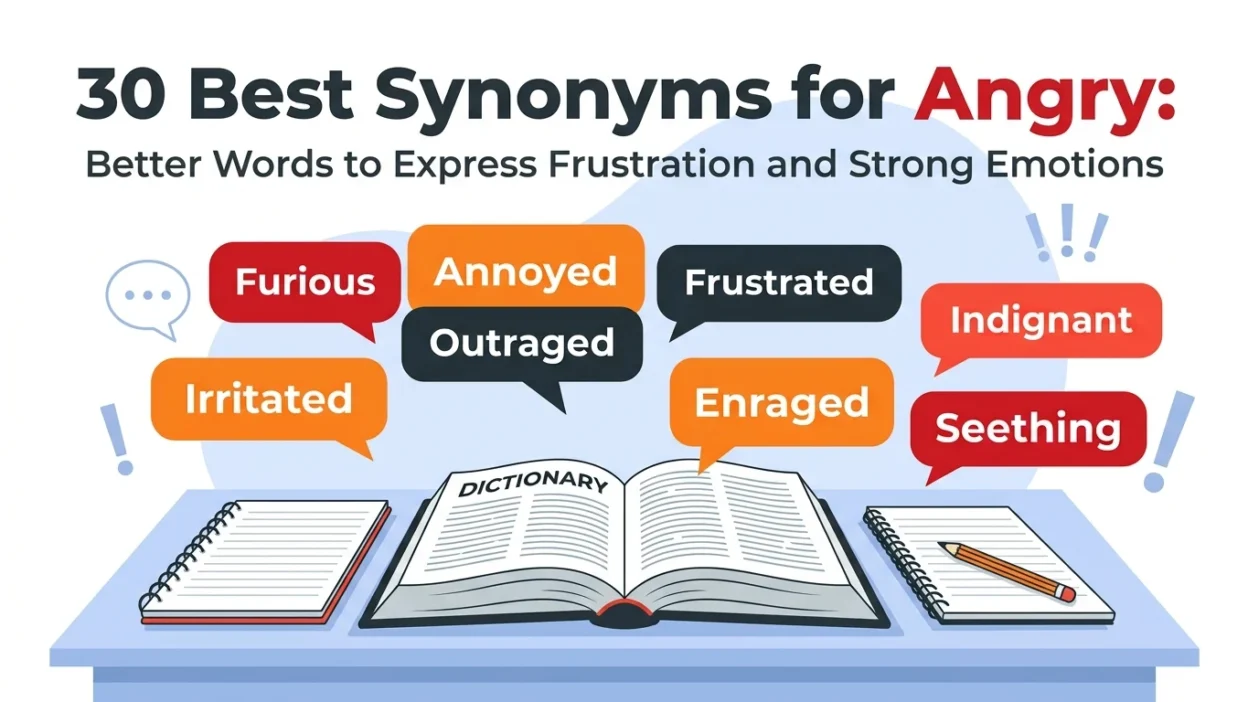
Here are 30 useful synonyms for angry:
- Mad
- Furious
- Annoyed
- Irritated
- Upset
- Cross
- Enraged
- Outraged
- Indignant
- Resentful
- Frustrated
- Agitated
- Bitter
- Offended
- Displeased
- Exasperated
- Heated
- Fuming
- Infuriated
- Incensed
- Provoked
- Hostile
- Wrathful
- Irate
- Vexed
- Grumpy
- Testy
- Sulky
- Stormy
- Seething
Synonyms for Angry with Meanings, Examples, and Usage
1. Mad
Meaning: Very angry or upset.
Example Sentence:
She was mad because someone damaged her bicycle.
Best Usage Context:
Common in everyday conversations, especially in American English.
2. Furious
Meaning: Extremely angry.
Example Sentence:
The coach was furious after the team’s careless mistakes.
Best Usage Context:
Perfect for describing intense anger in both speaking and writing.
3. Annoyed
Meaning: Slightly angry because something is irritating.
Example Sentence:
I was annoyed by the constant noise outside.
Best Usage Context:
Ideal for small everyday problems and minor frustrations.
4. Irritated
Meaning: Feeling bothered or slightly angry.
Example Sentence:
He became irritated after waiting for an hour.
Best Usage Context:
Suitable for delays, repeated mistakes, and small inconveniences.
5. Upset
Meaning: Feeling unhappy, disappointed, or slightly angry.
Example Sentence:
She felt upset after hearing the bad news.
Best Usage Context:
Best for emotional situations, relationships, and personal conversations.
6. Cross
Meaning: Slightly angry or annoyed.
Example Sentence:
My grandmother looked cross when we forgot her birthday.
Best Usage Context:
Common in British English and family conversations.
7. Enraged
Meaning: Extremely angry and full of strong emotion.
Example Sentence:
The crowd became enraged after hearing the unfair announcement.
Best Usage Context:
Perfect for dramatic situations, news stories, and fiction.
8. Outraged
Meaning: Very angry because something is unfair or shocking.
Example Sentence:
Many citizens were outraged by the decision.
Best Usage Context:
Ideal for social issues, politics, news, and public reactions.
9. Indignant
Meaning: Angry because something seems unfair or wrong.
Example Sentence:
She was indignant when someone questioned her honesty.
Best Usage Context:
Useful for formal writing, debates, ethics, and justice.
10. Resentful
Meaning: Angry because you feel unfairly treated.
Example Sentence:
He became resentful after being ignored for the promotion.
Best Usage Context:
Best for relationships, workplaces, and long-term conflicts.
11. Frustrated
Meaning: Angry because you cannot achieve something or solve a problem.
Example Sentence:
The students felt frustrated by the difficult assignment.
Best Usage Context:
Perfect for school, work, technology, and everyday challenges.
12. Agitated
Meaning: Nervous, upset, and slightly angry.
Example Sentence:
The customer became agitated while waiting for assistance.
Best Usage Context:
Suitable for stressful situations, healthcare, and customer service.
13. Bitter
Meaning: Angry and unhappy because of disappointment or unfair treatment.
Example Sentence:
He remained bitter after losing the competition.
Best Usage Context:
Ideal for personal experiences, relationships, and long-term emotions.
14. Offended
Meaning: Feeling hurt or angry because of someone’s words or actions.
Example Sentence:
She felt offended by the rude comment.
Best Usage Context:
Useful for conversations, social situations, and misunderstandings.
15. Displeased
Meaning: Not satisfied and slightly angry.
Example Sentence:
The manager was displeased with the team’s performance.
Best Usage Context:
Best for professional settings, feedback, schools, and workplaces.
16. Exasperated
Meaning: Extremely annoyed because of repeated problems or frustration.
Example Sentence:
The teacher became exasperated after explaining the same rule several times.
Best Usage Context:
Perfect for classrooms, workplaces, parenting, and ongoing challenges.
17. Heated
Meaning: Showing strong anger or intense emotion.
Example Sentence:
The discussion became heated after the disagreement.
Best Usage Context:
Best for debates, meetings, arguments, and political discussions.
18. Fuming
Meaning: Very angry and unable to hide it.
Example Sentence:
She was fuming after discovering the mistake.
Best Usage Context:
Ideal for conversations, storytelling, and everyday situations.
19. Infuriated
Meaning: Filled with extreme anger.
Example Sentence:
The customer was infuriated by the poor service.
Best Usage Context:
Useful for customer complaints, news stories, and dramatic writing.
20. Incensed
Meaning: Extremely angry because of something offensive or unfair.
Example Sentence:
Residents were incensed by the sudden increase in taxes.
Best Usage Context:
Perfect for formal writing, news articles, politics, and public reactions.
21. Provoked
Meaning: Made angry because someone intentionally caused irritation.
Example Sentence:
He felt provoked by the rude remarks.
Best Usage Context:
Suitable for arguments, conflicts, and personal relationships.
22. Hostile
Meaning: Showing anger and a willingness to argue or fight.
Example Sentence:
The crowd became hostile after the announcement.
Best Usage Context:
Best for conflicts, negotiations, politics, and serious disagreements.
23. Wrathful
Meaning: Full of intense anger or rage.
Example Sentence:
The king gave the soldiers a wrathful look.
Best Usage Context:
Ideal for literature, historical writing, fantasy, and dramatic storytelling.
24. Irate
Meaning: Very angry, especially because something went wrong.
Example Sentence:
The irate customer demanded a refund.
Best Usage Context:
Useful for business, customer service, journalism, and formal writing.
25. Vexed
Meaning: Annoyed or frustrated by a problem.
Example Sentence:
She looked vexed after the computer crashed again.
Best Usage Context:
Suitable for everyday problems, work, school, and conversations.
26. Grumpy
Meaning: Easily annoyed and in a bad mood.
Example Sentence:
My grandfather gets grumpy when he misses his afternoon nap.
Best Usage Context:
Perfect for family conversations, children, and casual writing.
27. Testy
Meaning: Easily irritated and impatient.
Example Sentence:
The coach became testy after repeated mistakes by the team.
Best Usage Context:
Best for workplaces, sports, and everyday conversations.
28. Sulky
Meaning: Quietly angry because you feel disappointed or treated unfairly.
Example Sentence:
The child became sulky after losing the game.
Best Usage Context:
Ideal for children, family situations, friendships, and informal writing.
29. Stormy
Meaning: Full of strong anger, conflict, or emotional tension.
Example Sentence:
They had a stormy argument about the decision.
Best Usage Context:
Useful for relationships, politics, meetings, and storytelling.
30. Seething
Meaning: Feeling intense anger that is difficult to control.
Example Sentence:
He was seething with anger after hearing the false accusation.
Best Usage Context:
Perfect for novels, dramatic writing, and descriptions of strong emotions.
Comparison Guide: When to Use Different Synonyms
Choosing the Best Word for the Situation
| Synonym | Best Used For | Tone |
|---|---|---|
| Mad | Everyday conversations | Casual |
| Furious | Strong anger, arguments | Intense |
| Annoyed | Minor problems | Mild |
| Irritated | Small frustrations | Neutral |
| Upset | Emotional situations | Gentle |
| Cross | Family conversations | British English |
| Enraged | Fiction, dramatic events | Very strong |
| Outraged | Social issues, news | Formal |
| Frustrated | Work, school, daily challenges | Common |
| Bitter | Long-term disappointment | Emotional |
| Exasperated | Repeated problems | Professional |
| Hostile | Conflicts, negotiations | Serious |
| Irate | Customer complaints | Formal |
| Grumpy | Everyday moods | Informal |
| Seething | Hidden but intense anger | Dramatic |
How to Choose the Right Synonym
For Academic Writing
Formal writing benefits from precise and professional vocabulary.
Good choices include:
- Indignant
- Outraged
- Incensed
- Irate
- Hostile
- Displeased
For Creative Writing
Stories become more vivid when emotions are described with specific words.
Try these words:
- Furious
- Enraged
- Seething
- Wrathful
- Stormy
- Bitter
For Everyday Conversation
Simple words are often the most natural in daily speech.
Consider using:
- Mad
- Annoyed
- Upset
- Frustrated
- Grumpy
- Irritated
For Business and Professional Writing
Professional communication should describe emotions clearly without sounding overly dramatic.
Useful options include:
- Displeased
- Frustrated
- Exasperated
- Concerned
- Irate
- Heated
For Reviews and Storytelling
If you’re describing emotional scenes in books, movies, or stories, choose words that match the intensity.
Excellent choices are:
- Furious
- Infuriated
- Seething
- Enraged
- Wrathful
- Outraged
Common Mistakes to Avoid
Don’t Use Every Synonym the Same Way
Although these words all describe anger, they vary in strength. For example, annoyed describes a mild feeling, while furious and enraged express much stronger emotions.
Match the Tone
Formal writing works better with words like indignant, incensed, or irate, while casual conversations usually sound more natural with mad, annoyed, or grumpy.
Consider the Situation
Choose the synonym that best fits the context. A customer may be displeased, while a character in a novel might be seething or wrathful.
FAQs
What is the best synonym for “angry”?
Some of the best synonyms are furious, annoyed, frustrated, irritated, and mad. The best choice depends on how strong the emotion is.
Which synonym is best for essays?
For academic writing, indignant, outraged, incensed, irate, and displeased are excellent choices because they sound formal and precise.
Is “furious” stronger than “angry”?
Yes. Furious describes a much stronger level of anger than the general word angry.
Can I use “annoyed” instead of “angry”?
Yes. Annoyed is a good alternative when describing mild anger or irritation rather than intense rage.
Conclusion
Learning different synonyms for angry helps you express emotions with greater accuracy and variety. While angry is a useful everyday word, choosing a more specific synonym allows you to match the exact level and type of emotion you want to describe.
If you’re writing an essay, creating a story, describing a disagreement, or having a conversation, words like furious, annoyed, frustrated, indignant, seething, and displeased can make your language more expressive and engaging.
Practice using these alternatives in different situations to strengthen your English vocabulary and improve both your writing and speaking skills.

Julian Luke is a passionate grammar and language writer at Synolexes. He simplifies complex grammar rules, vocabulary, and writing concepts, helping learners improve their English communication skills with confidence.