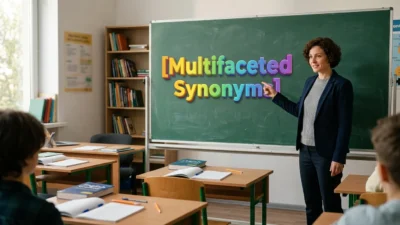

The word nuanced is often used to describe something that has small but important differences, subtle details, or deeper layers of meaning. It is common in writing, education, business, literature, and everyday conversations when people want to express ideas with greater accuracy.Learning nuanced synonyms helps students, ESL learners, writers, and content creators choose words that match the exact meaning they want to express.
While many words seem similar, each one has its own tone, context, and level of formality. Understanding these differences can improve both your writing and speaking skills. In this guide, you’ll learn the meaning of nuanced, explore 30 useful synonyms, discover simple definitions, read example sentences, and understand the best situations for using each word.
What Does “Nuanced” Mean?
Nuanced means having small, subtle, or carefully balanced differences that make something more detailed or meaningful. A nuanced idea, opinion, or explanation considers different perspectives instead of being overly simple.
For example, a nuanced argument looks at both the advantages and disadvantages of a topic rather than giving only one side.
Tone: Thoughtful, detailed, balanced, and sophisticated.
Common Usage:
- Writing and literature
- Academic discussions
- Business communication
- Critical thinking
- Art and design
- Everyday conversations about complex topics
30 Nuanced Synonyms
1. Subtle
Meaning: Not obvious but important.
Example Sentence: The painting has subtle color changes that make it beautiful.
Best Usage Context: Art, writing, emotions, and observations.
2. Refined
Meaning: Improved through careful attention to detail.
Example Sentence: Her presentation became more refined after editing.
Best Usage Context: Writing, design, communication, and skills.
3. Sophisticated
Meaning: Complex, intelligent, and well-developed.
Example Sentence: The report offers a sophisticated analysis of the problem.
Best Usage Context: Academic, business, and professional writing.
4. Detailed
Meaning: Including many important facts or features.
Example Sentence: The guide provides a detailed explanation of the process.
Best Usage Context: Instructions, reports, and educational content.
5. Delicate
Meaning: Requiring careful handling because of small differences.
Example Sentence: They discussed the delicate issue with great respect.
Best Usage Context: Sensitive topics and relationships.
6. Precise
Meaning: Very exact and accurate.
Example Sentence: Scientists need precise measurements during experiments.
Best Usage Context: Science, education, and technical writing.
7. Fine
Meaning: Showing small or careful distinctions.
Example Sentence: There is a fine difference between confidence and arrogance.
Best Usage Context: Comparisons and thoughtful discussions.
8. Intricate
Meaning: Having many connected details.
Example Sentence: The artist created an intricate pattern on the wall.
Best Usage Context: Art, design, architecture, and craftsmanship.
9. Thoughtful
Meaning: Showing careful thinking and consideration.
Example Sentence: She gave a thoughtful answer during the interview.
Best Usage Context: Conversations, essays, and decision-making.
10. Balanced
Meaning: Fair and considering different viewpoints.
Example Sentence: The article presents a balanced opinion on the issue.
Best Usage Context: Journalism, debates, and academic writing.
11. Perceptive
Meaning: Quick to notice small but important details.
Example Sentence: His perceptive comments impressed the audience.
Best Usage Context: Reviews, discussions, and critical thinking.
12. Discerning
Meaning: Able to judge quality or differences wisely.
Example Sentence: Discerning readers noticed the author’s hidden message.
Best Usage Context: Literature, art, and professional reviews.
13. Careful
Meaning: Paying close attention to details.
Example Sentence: A careful editor can improve any article.
Best Usage Context: Editing, writing, and planning.
14. Complex
Meaning: Made of many connected parts or ideas.
Example Sentence: Climate change is a complex global issue.
Best Usage Context: Science, education, and research.
15. Layered
Meaning: Having several levels of meaning or understanding.
Example Sentence: The novel tells a layered story with many themes.
Best Usage Context: Literature, storytelling, films, and art.
16. Multifaceted
Meaning: Having many different features or aspects.
Example Sentence: She has a multifaceted personality that makes her interesting.
Best Usage Context: People, ideas, business, and creativity.
17. Insightful
Meaning: Showing deep understanding of a subject.
Example Sentence: His insightful comments improved the discussion.
Best Usage Context: Essays, reviews, education, and professional communication.
18. Discriminating
Meaning: Able to recognize small differences and make wise choices.
Example Sentence: A discriminating reader notices subtle changes in tone.
Best Usage Context: Literature, art, and product reviews.
19. Elaborate
Meaning: Carefully developed with many details.
Example Sentence: The architect presented an elaborate building design.
Best Usage Context: Design, planning, writing, and presentations.
20. Thorough
Meaning: Complete and carefully done.
Example Sentence: The teacher gave a thorough explanation of the lesson.
Best Usage Context: Education, reports, and research.
21. Comprehensive
Meaning: Covering all important details.
Example Sentence: This guide offers a comprehensive overview of English grammar.
Best Usage Context: Tutorials, research, and educational content.
22. Analytical
Meaning: Based on careful examination and logical thinking.
Example Sentence: Her analytical approach solved the problem quickly.
Best Usage Context: Business, science, education, and research.
23. Sensitive
Meaning: Aware of small emotional or social differences.
Example Sentence: He handled the sensitive conversation with great care.
Best Usage Context: Relationships, communication, and emotional topics.
24. Intelligent
Meaning: Showing strong understanding and good judgment.
Example Sentence: She asked intelligent questions during the meeting.
Best Usage Context: Education, business, and discussions.
25. Meaningful
Meaning: Full of importance or deeper significance.
Example Sentence: Their conversation was meaningful and inspiring.
Best Usage Context: Personal experiences, speeches, and writing.
26. Thought-Provoking
Meaning: Making people think deeply about a topic.
Example Sentence: The documentary raised several thought-provoking questions.
Best Usage Context: Education, media, literature, and presentations.
27. Observant
Meaning: Good at noticing details.
Example Sentence: Observant students often ask insightful questions.
Best Usage Context: Learning, investigations, and everyday conversations.
28. Interpretive
Meaning: Explaining or understanding something in a thoughtful way.
Example Sentence: The museum guide gave an interpretive explanation of the artwork.
Best Usage Context: Art, literature, education, and history.
29. Contextual
Meaning: Related to the surrounding situation or circumstances.
Example Sentence: Understanding the historical background gives a contextual view of the novel.
Best Usage Context: Education, history, research, and writing.
30. Substantive
Meaning: Rich in important ideas or meaningful content.
Example Sentence: The meeting included a substantive discussion about future plans.
Best Usage Context: Business, academic writing, and formal discussions.
Comparison Guide: When to Use Different Nuanced Synonyms
| Synonym | Best Used For | Tone |
|---|---|---|
| Subtle | Small differences | Gentle |
| Refined | Improved quality | Professional |
| Sophisticated | Advanced ideas | Formal |
| Detailed | Complete explanations | Neutral |
| Delicate | Sensitive topics | Careful |
| Precise | Exact information | Technical |
| Fine | Small distinctions | Thoughtful |
| Intricate | Complex designs | Descriptive |
| Thoughtful | Careful opinions | Friendly |
| Balanced | Fair discussions | Neutral |
| Perceptive | Deep observations | Intelligent |
| Discerning | Wise judgment | Formal |
| Careful | Attention to detail | Neutral |
| Complex | Difficult ideas | Academic |
| Layered | Multiple meanings | Literary |
| Multifaceted | Many aspects | Professional |
| Insightful | Deep understanding | Positive |
| Discriminating | Recognizing quality | Formal |
| Elaborate | Rich details | Descriptive |
| Thorough | Complete work | Professional |
| Comprehensive | Full coverage | Academic |
| Analytical | Logical thinking | Technical |
| Sensitive | Emotional awareness | Gentle |
| Intelligent | Smart reasoning | Positive |
| Meaningful | Important ideas | Emotional |
| Thought-Provoking | Deep thinking | Reflective |
| Observant | Noticing details | Everyday |
| Interpretive | Explaining meaning | Academic |
| Contextual | Related to circumstances | Formal |
| Substantive | Rich content | Professional |
How to Choose the Right Synonym
The best synonym depends on what you want to describe and the tone of your writing.
For Academic and Professional Writing
Use sophisticated, analytical, comprehensive, precise, thorough, and substantive when writing essays, reports, research papers, or business documents.
For Literature and Creative Writing
Choose layered, subtle, interpretive, intricate, refined, and thought-provoking to describe stories, poems, artwork, or characters.
For Everyday Conversations
Words like thoughtful, careful, meaningful, balanced, and observant are easy to understand and sound natural in daily English.
For Sensitive Topics
Use delicate, sensitive, balanced, and contextual when discussing emotional, cultural, or personal subjects.
For Critical Thinking and Analysis
Choose perceptive, discerning, insightful, analytical, and intelligent when discussing ideas, opinions, or complex issues.
Common Mistakes When Using Nuanced Synonyms
Many English learners think every synonym of nuanced has the same meaning. In reality, each word highlights a different quality.
For example:
- Subtle focuses on small differences that are not immediately obvious.
- Precise emphasizes accuracy rather than complexity.
- Layered suggests multiple meanings or interpretations.
- Analytical highlights logical thinking and careful examination.
- Thought-provoking encourages readers or listeners to think deeply.
Choosing the right synonym helps your writing become clearer, more natural, and more engaging.
Conclusion
Learning nuanced synonyms is an excellent way to improve your English vocabulary and writing skills.
Instead of using the same descriptive words repeatedly, you can choose alternatives that match the exact meaning, tone, and context you want to express.
If you’re writing an academic essay, creating online content, telling a story, or simply expanding your vocabulary, understanding these nuanced synonyms will help you communicate with greater confidence and precision.
Practice using them regularly, and you’ll soon notice a significant improvement in both your speaking and writing.