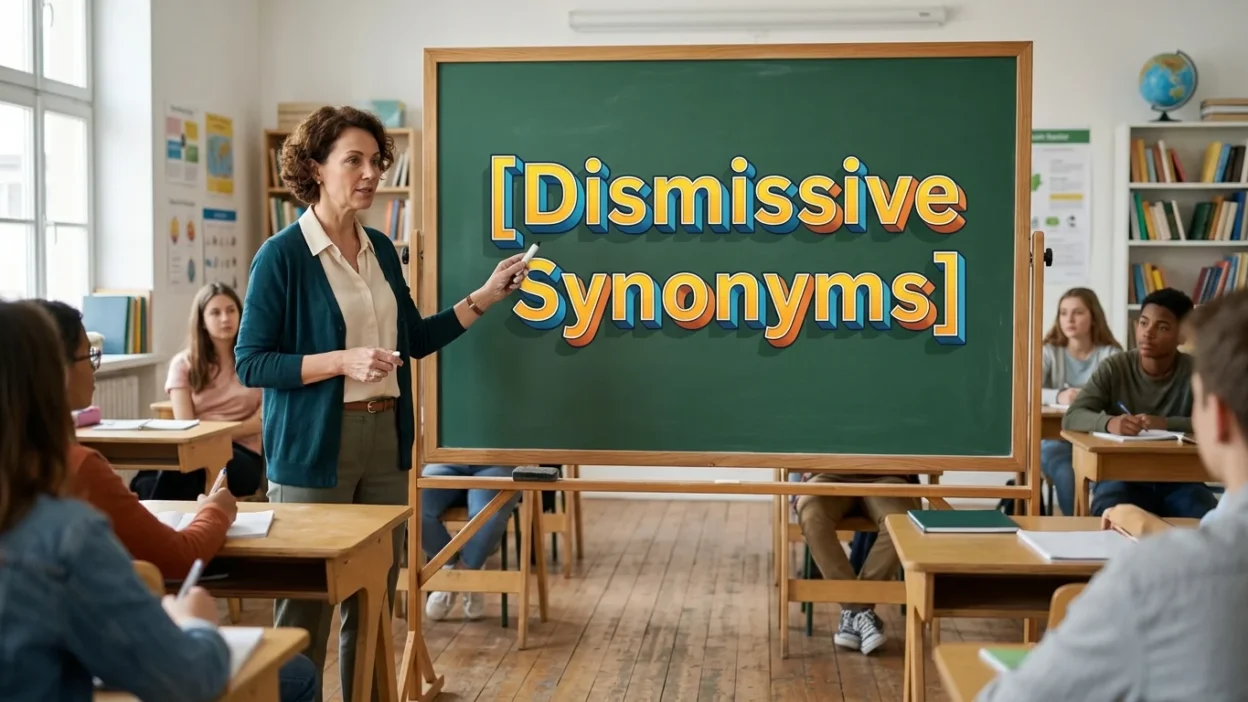
The word dismissive is used to describe an attitude that shows little interest, respect, or consideration toward a person, idea, suggestion, or feeling. A dismissive person may ignore opinions, reject ideas quickly, or act as if something is unimportant.
Learning dismissive synonyms helps students, ESL learners, writers, and content creators express different shades of negative attitudes more accurately. Some synonyms describe simple indifference, while others suggest disrespect, rejection, or contempt.
In this guide, you’ll learn the meaning of dismissive, explore 30 useful synonyms and related words, and understand when to use each one through simple definitions, example sentences, and practical usage notes.
What Does “Dismissive” Mean?
Dismissive means showing that you think something or someone is not important, valuable, or worthy of attention.
For example:
- She gave a dismissive response to the suggestion.
- His dismissive attitude upset the team.
Tone: Usually negative, critical, or indifferent.
Common Usage:
- Everyday conversations
- Workplace communication
- Literature
- Psychology
- Social relationships
- News and media
30 Dismissive Synonyms
1. Indifferent
Meaning: Showing little interest or concern.
Example Sentence: He seemed indifferent to the discussion.
Best Usage Context: Everyday conversations and formal writing.
2. Disdainful
Meaning: Showing strong dislike or disrespect.
Example Sentence: She gave a disdainful look at the proposal.
Best Usage Context: Literature and formal writing.
3. Contemptuous
Meaning: Showing that someone or something is beneath respect.
Example Sentence: His contemptuous remarks offended many people.
Best Usage Context: Formal writing and criticism.
4. Scornful
Meaning: Showing mockery or strong disapproval.
Example Sentence: She was scornful of their ideas.
Best Usage Context: Literature and opinion writing.
5. Uninterested
Meaning: Not paying attention or showing enthusiasm.
Example Sentence: He appeared uninterested during the meeting.
Best Usage Context: Everyday English and business.
6. Casual
Meaning: Not giving serious attention.
Example Sentence: Her casual attitude seemed dismissive.
Best Usage Context: Informal conversations.
7. Neglectful
Meaning: Failing to give proper attention or care.
Example Sentence: The manager was neglectful of employee concerns.
Best Usage Context: Workplace and social discussions.
8. Aloof
Meaning: Emotionally distant or detached.
Example Sentence: He remained aloof throughout the conversation.
Best Usage Context: Personality descriptions and literature.
9. Detached
Meaning: Showing little emotional involvement.
Example Sentence: Her detached manner seemed dismissive.
Best Usage Context: Formal writing and psychology.
10. Offhand
Meaning: Said without much thought or interest.
Example Sentence: He made an offhand comment about the issue.
Best Usage Context: Conversations and writing.
11. Condescending
Meaning: Acting as though others are less important.
Example Sentence: Her condescending tone upset the students.
Best Usage Context: Workplace and social situations.
12. Patronizing
Meaning: Treating others as less intelligent or capable.
Example Sentence: His patronizing attitude annoyed the team.
Best Usage Context: Professional and personal relationships.
13. Disrespectful
Meaning: Showing a lack of respect.
Example Sentence: The dismissive remark sounded disrespectful.
Best Usage Context: Everyday English and education.
14. Careless
Meaning: Not paying enough attention.
Example Sentence: His careless response disappointed everyone.
Best Usage Context: General writing and conversations.
15. Unconcerned
Meaning: Not worried or interested.
Example Sentence: She seemed unconcerned about the problem.
Best Usage Context: Everyday conversations and formal writing.
16. Disregarding
Meaning: Ignoring or paying no attention to something.
Example Sentence: He kept disregarding helpful advice.
Best Usage Context: Workplace, education, and everyday English.
17. Rejecting
Meaning: Refusing to accept an idea or suggestion.
Example Sentence: She was rejecting every solution without discussion.
Best Usage Context: Business meetings and conversations.
18. Belittling
Meaning: Making someone or something seem less important.
Example Sentence: His belittling comments hurt her confidence.
Best Usage Context: Personal relationships and workplace communication.
19. Derisive
Meaning: Showing ridicule or mockery.
Example Sentence: The audience responded with derisive laughter.
Best Usage Context: Literature, journalism, and criticism.
20. Cynical
Meaning: Believing that people are motivated by selfish reasons.
Example Sentence: His cynical response sounded dismissive.
Best Usage Context: Opinion writing and discussions.
21. Cold
Meaning: Showing little warmth or emotion.
Example Sentence: She gave him a cold reply.
Best Usage Context: Everyday English and storytelling.
22. Insensitive
Meaning: Not caring about other people’s feelings.
Example Sentence: His insensitive remark upset everyone.
Best Usage Context: Social relationships and workplace communication.
23. Unresponsive
Meaning: Failing to react or respond.
Example Sentence: The manager remained unresponsive to complaints.
Best Usage Context: Business and customer service.
24. Blunt
Meaning: Speaking in a direct way without considering feelings.
Example Sentence: His blunt answer sounded dismissive.
Best Usage Context: Conversations and professional settings.
25. Brusque
Meaning: Short and unfriendly in speech or behavior.
Example Sentence: The receptionist gave a brusque reply.
Best Usage Context: Formal writing and customer service.
26. Curt
Meaning: Rudely brief in speech.
Example Sentence: He gave a curt response and walked away.
Best Usage Context: Literature and workplace communication.
27. Snobbish
Meaning: Acting as though you are superior to others.
Example Sentence: Her snobbish attitude made people uncomfortable.
Best Usage Context: Personality descriptions.
28. Arrogant
Meaning: Showing excessive confidence and looking down on others.
Example Sentence: His arrogant behavior appeared dismissive.
Best Usage Context: Professional and social discussions.
29. Supercilious
Meaning: Behaving as though you are better than other people.
Example Sentence: The executive’s supercilious tone annoyed the staff.
Best Usage Context: Formal writing and literature.
30. Disparaging
Meaning: Expressing a negative or insulting opinion.
Example Sentence: She made several disparaging remarks about the proposal.
Best Usage Context: Journalism, academic writing, and criticism.
Comparison Guide: When to Use Different Dismissive Synonyms
| Term | Best Used For | Tone |
|---|---|---|
| Dismissive | General lack of respect | Neutral |
| Indifferent | Lack of interest | Neutral |
| Uninterested | No enthusiasm | Everyday |
| Disdainful | Strong disrespect | Formal |
| Contemptuous | Looking down on others | Strong |
| Scornful | Mocking or insulting | Literary |
| Condescending | Acting superior | Professional |
| Patronizing | Talking down to others | Professional |
| Aloof | Emotionally distant | Neutral |
| Detached | Emotionally uninvolved | Formal |
| Brusque | Short and unfriendly | Professional |
| Curt | Rudely brief | Formal |
| Belittling | Making others feel unimportant | Personal |
| Disparaging | Criticizing negatively | Academic |
| Arrogant | Feeling superior | General |
How to Choose the Right Synonym
The best synonym for dismissive depends on the attitude you want to describe.
For Lack of Interest
Use indifferent, uninterested, unconcerned, or detached when someone simply shows little attention or care.
For Disrespect or Superiority
Choose condescending, patronizing, disdainful, contemptuous, supercilious, or arrogant when someone treats others as inferior.
For Short or Rude Responses
Use brusque, curt, offhand, or blunt when describing speech that seems dismissive.
For Formal or Academic Writing
Words like derisive, disparaging, scornful, belittling, and disdainful work well in essays, reports, and professional writing.
Common Mistakes When Using Dismissive Synonyms
Many learners think every dismissive synonym has the same meaning, but each word has a different nuance.
For example:
- Indifferent means not interested, but it does not always imply disrespect.
- Condescending suggests acting as though you are superior.
- Patronizing often sounds falsely kind while talking down to someone.
- Brusque and curt describe speech that is brief and unfriendly.
- Contemptuous expresses a much stronger feeling of disrespect than dismissive.
Choosing the correct synonym makes your writing clearer and more natural.
Conclusion
Learning dismissive synonyms helps you describe attitudes of indifference, disrespect, or rejection more precisely. Whether you choose indifferent, condescending, disdainful, curt, or belittling, each word adds a different shade of meaning.
By understanding these differences, you’ll improve your vocabulary, strengthen your writing, and communicate more effectively in academic, professional, and everyday English.
FAQs
What is the closest synonym for dismissive?
Indifferent, disdainful, uninterested, and contemptuous are among the closest synonyms, depending on the context.
Is dismissive always negative?
Yes. Dismissive usually has a negative meaning because it suggests ignoring or undervaluing someone or something.
What is a formal synonym for dismissive?
Disdainful, contemptuous, derisive, supercilious, and disparaging are common formal alternatives.
What is the difference between dismissive and indifferent?
Dismissive implies actively rejecting or treating something as unimportant, while indifferent simply means lacking interest or concern.
Why should I learn dismissive synonyms?
Learning these synonyms helps you describe different attitudes and behaviors more accurately in conversations, essays, stories, and professional writing.

Julian Luke is a passionate grammar and language writer at Synolexes. He simplifies complex grammar rules, vocabulary, and writing concepts, helping learners improve their English communication skills with confidence.