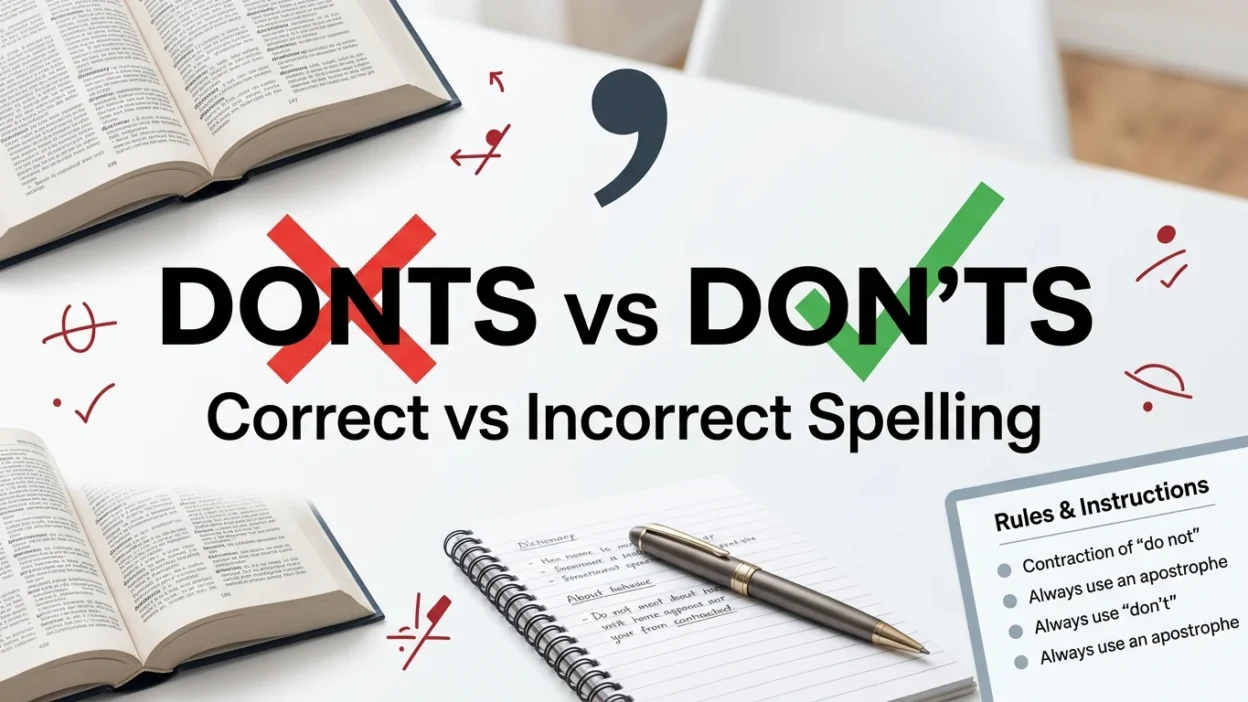
Are you wondering whether the correct spelling is donts or don’ts? This is a common punctuation and spelling question, especially when writing the familiar phrase dos and don’ts. The difference is simple: the standard form is don’ts, with an apostrophe.
Don’ts is the plural form of don’t, the contraction of do not. It is used as a noun to describe things that should not be done, especially in instructions, rules, advice, and guidelines. For example, a safety guide may contain a list of dos and don’ts.
The form donts, without an apostrophe, is not the standard spelling when you mean the plural noun don’ts. The apostrophe matters because it preserves the contraction don’t. In this article, you will learn the difference between donts vs don’ts, how to use the word correctly, common mistakes, and an easy way to remember the spelling.
Quick Answer
Don’ts is the correct standard spelling when you mean things that should not be done. It is the plural noun formed from don’t, the contraction of do not. Donts without an apostrophe is generally considered incorrect for this meaning. The common expression is dos and don’ts.
Why Do People Confuse It?
The confusion usually comes from the question of whether an apostrophe should be used to make a word plural.
In most English words, you do not use an apostrophe to form a plural:
- book → books
- rule → rules
- idea → ideas
However, don’t is not an ordinary single word. It is a contraction made from do not.
When don’t is used as a noun to refer to things that should not be done, its plural form keeps the apostrophe:
don’t → don’ts
That is why the standard spelling is don’ts, not donts.
First Word: Donts
Is Donts Correct?
In standard English, donts is not the preferred spelling when you mean the plural of don’t.
The missing apostrophe removes an important part of the original contraction.
For example:
Incorrect:
Here are the main donts for new employees.
Standard:
Here are the main don’ts for new employees.
Why Does Donts Look Possible?
Donts may look reasonable because English normally forms plurals by adding -s. However, don’t already contains an apostrophe because it represents the missing letters in do not.
When the word is used as a noun, the apostrophe remains.
Second Word: Don’ts
What Does Don’ts Mean?
Don’ts means actions or behaviors that should not be done.
It is commonly used when giving rules, advice, instructions, or warnings.
Examples:
- The article explains the dos and don’ts of job interviews.
- Learn the dos and don’ts before starting the project.
- The teacher gave us a list of classroom don’ts.
In these sentences, don’ts is being used as a noun.
Don’t vs Don’ts
It is important to understand the difference between these two forms.
Don’t is usually a verb contraction.
Example:
- Don’t touch the machine.
Don’ts is a plural noun.
Example:
- The safety guide lists several important don’ts.
The first tells someone not to do something. The second refers to a group of things that should not be done.
Comparison Table
| Form | Correct? | Meaning | Example |
|---|---|---|---|
| Don’ts | Yes | Things that should not be done | Follow the dos and don’ts. |
| Don’ts | Yes | Same word using a straight apostrophe | Read the dos and don’ts. |
| Donts | No for this meaning | Nonstandard spelling without apostrophe | Avoid this spelling. |
The forms don’ts and don’ts differ only in the style of apostrophe. The curly apostrophe ’ is a typographic version of the straight apostrophe ‘. Both represent the same word.
When to Use Each
When to Use Don’ts
Use don’ts when you are talking about a list or group of actions that should be avoided.
Examples:
- the dos and don’ts
- interview don’ts
- safety don’ts
- writing don’ts
- workplace don’ts
When to Use Don’t
Use don’t when it functions as the contraction of do not.
Examples:
- Don’t be late.
- I don’t understand.
- They don’t agree.
- Don’t forget your homework.
When Not to Use Donts
Avoid donts in standard writing when you intend the noun meaning.
Write:
don’ts
not:
donts
10+ Examples of Don’ts
Here are several natural examples showing how don’ts is used.
- The guide explains the main dos and don’ts of traveling abroad.
- The teacher gave students a list of classroom don’ts.
- Knowing the basic interview don’ts can help you avoid common mistakes.
- The safety manual contains important dos and don’ts.
- The website lists the dos and don’ts of online communication.
- Parents often teach children simple household dos and don’ts.
- The manager explained the workplace don’ts during orientation.
- The article covers the dos and don’ts of professional writing.
- Before using the equipment, read the safety dos and don’ts.
- The speaker shared several social media dos and don’ts.
- The course teaches students the dos and don’ts of academic writing.
- Visitors should follow all the posted dos and don’ts.
- The handbook clearly separates the recommended actions from the don’ts.
- The coach explained the dos and don’ts before the competition.
- The guide provides useful travel tips along with common don’ts.
Common Mistakes
Mistake 1: Writing Donts
Incorrect:
Here are some important donts for beginners.
Correct:
Here are some important don’ts for beginners.
The apostrophe should remain in the word.
Mistake 2: Writing Dont’s
Incorrect:
The article lists several dont’s.
Correct:
The article lists several don’ts.
Do not place the apostrophe between t and s. The apostrophe belongs inside the contraction, before the final t.
Mistake 3: Writing Don’s
Incorrect:
The guide explains the dos and don’s.
Correct:
The guide explains the dos and don’ts.
The plural form is don’ts, not don’s.
Mistake 4: Confusing Don’t With Don’ts
Incorrect:
The teacher gave us several don’t.
Correct:
The teacher gave us several don’ts.
When talking about multiple things that should not be done, use the plural noun don’ts.
Mistake 5: Forgetting That the Apostrophe Represents Missing Letters
The apostrophe in don’t represents letters omitted from do not.
So:
do not → don’t
The plural noun keeps the same contraction:
don’t → don’ts
Memory Trick
A simple memory trick is to remember the phrase:
dos and don’ts
You will often see these words together when discussing rules or advice.
Think of the pattern as:
do → dos
don’t → don’ts
The apostrophe stays because don’t is a contraction.
Another useful trick is to remember:
do not = don’t
Since the apostrophe belongs to don’t, keep it when making the noun plural:
don’ts
American vs British English
The spelling don’t and the plural noun don’ts are used in both American and British English.
There is no major American-British spelling difference for this word.
Both varieties commonly use:
- don’t
- don’ts
- dos and don’ts
The main difference you may notice is typographic rather than grammatical. Some publishers and websites use the straight apostrophe ‘, while more polished typography may use the curly apostrophe ’.
For example:
- don’ts
- don’ts
Both are understood as the same word.
Similar Words
Several expressions have meanings similar to don’ts.
Prohibitions
Prohibitions are rules that say something is not allowed.
Example:
The building has strict prohibitions against smoking.
Restrictions
Restrictions are limits placed on what people can do.
Example:
The website has age restrictions.
Warnings
Warnings tell people about possible danger or problems.
Example:
The manual contains several safety warnings.
Rules
Rules are instructions about what is allowed or expected.
Example:
The school has clear rules about classroom behavior.
Guidelines
Guidelines provide recommended ways to behave or complete something.
Example:
The company published guidelines for professional communication.
Don’ts is usually more informal and conversational than words such as prohibitions or restrictions.
Don’ts in the Phrase Dos and Don’ts
The expression dos and don’ts is one of the most common ways to use don’ts.
It means a list of recommended and discouraged actions.
Examples:
- Learn the dos and don’ts of public speaking.
- The guide explains the dos and don’ts of email etiquette.
- New employees receive a list of workplace dos and don’ts.
The phrase is useful because it gives advice in a simple and memorable format.
Dos or Do’s?
You may also wonder about the first word in dos and don’ts.
In modern standard usage, dos is generally preferred as the plural of do when do is being used as a noun.
For example:
- the dos and don’ts of writing
You may still encounter do’s and don’ts, especially in older or informal writing, but dos and don’ts is a common modern form.
The important point for this article is that don’ts keeps its apostrophe because it comes from don’t.
Don’t as a Contraction
To understand the spelling, it helps to understand the original word.
Don’t is a contraction of do not.
Examples:
- I do not know → I don’t know.
- They do not agree → They don’t agree.
- Do not worry → Don’t worry.
The apostrophe shows that part of the original expression has been omitted.
When don’t becomes a noun meaning something that should not be done, the apostrophe remains.
Example:
- One don’t is speaking loudly during the exam.
- Several don’ts are listed in the handbook.
The second example uses the plural noun form.
Don’ts in Different Contexts
Writing
- Avoid common writing don’ts such as unnecessary repetition.
Interviews
- Learn the most important interview don’ts before your meeting.
Safety
- The poster clearly shows the main safety don’ts.
Travel
- Tourists should learn local dos and don’ts.
Workplace
- New employees receive a list of workplace dos and don’ts.
Social Media
- The guide explains social media dos and don’ts.
Education
- Students should understand the dos and don’ts of academic writing.
Final Verdict
The standard spelling is don’ts, not donts, when you mean things that should not be done.
The apostrophe is important because don’t is a contraction of do not. When the contraction is used as a noun and made plural, the apostrophe stays:
don’t → don’ts
The form don’ts, using a straight apostrophe, is also correct and means exactly the same thing as don’ts. The difference between ’ and ‘ is simply typographic style.
FAQs
Is donts a correct spelling?
No. Donts without an apostrophe is not the standard spelling when referring to things that should not be done. Use don’ts instead.
Is it donts or don’ts?
The correct form is don’ts. You can also write don’ts with a straight apostrophe.
Why does don’ts have an apostrophe?
The apostrophe comes from don’t, which is a contraction of do not. The apostrophe remains when the word is used as a plural noun.
What is the plural of don’t?
The standard plural noun form is don’ts.
Example:
The guide lists several important don’ts.
Is dont’s correct?
No. Dont’s is incorrect. The apostrophe belongs before the t, giving don’ts.
Is don’t different from don’ts?
Yes. Don’t is usually a contraction meaning do not. Don’ts is a noun referring to things that should not be done.
Which is correct: dos and donts or dos and don’ts?
The standard form is dos and don’ts.
Is don’ts used in American and British English?
Yes. Don’ts is used in both American and British English.
Remember This
Keep this simple pattern in mind:
don’t = do not
don’ts = things that should not be done
So write:
dos and don’ts
Not:
dos and donts
The apostrophe is an important part of the standard spelling.
Conclusion
When comparing donts vs don’ts, the correct standard form is don’ts. It is the plural noun used for actions, behaviors, or choices that should be avoided. The apostrophe remains because the word comes from the contraction don’t, meaning do not.
Remember that don’t and don’ts serve different grammatical purposes. Don’t is normally used to tell someone not to do something, while don’ts refers to a group of actions that should not be done. The easiest phrase to remember is dos and don’ts. Using the apostrophe correctly will keep your writing clear, polished, and grammatically accurate.