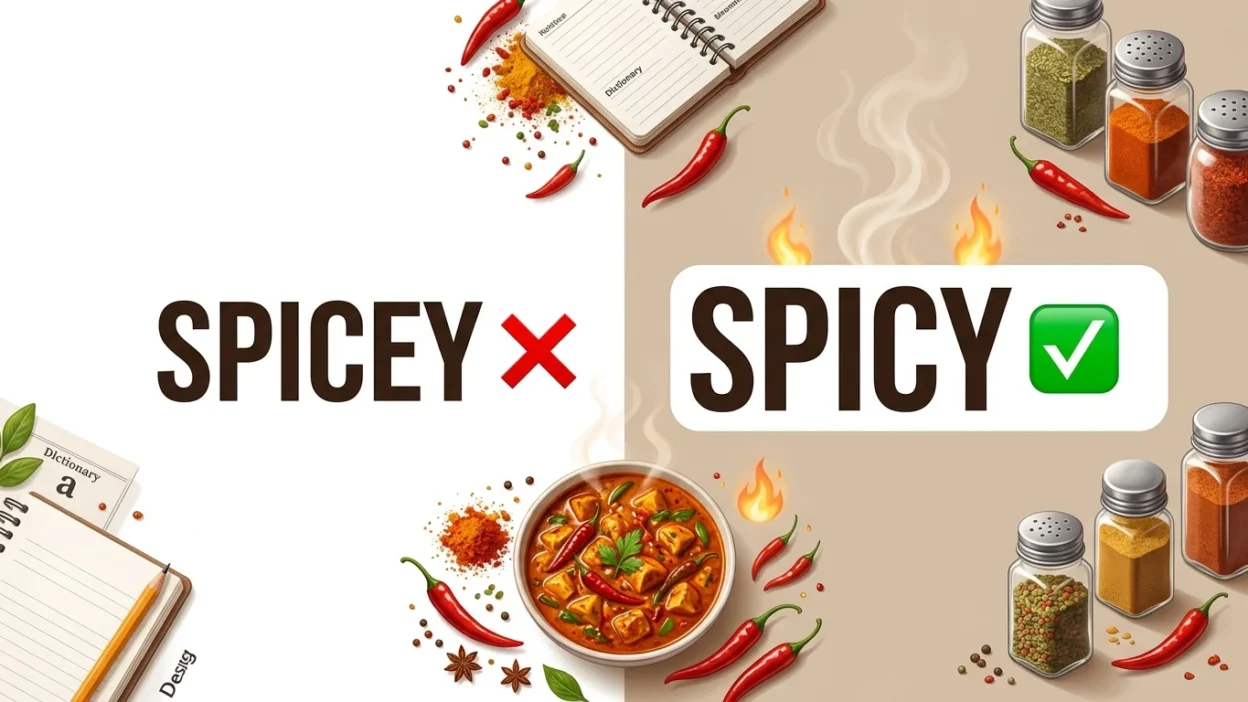
When writing about food, flavors, sauces, or seasonings, you may wonder whether the correct spelling is spicey or spicy. These two spellings look very similar, so it is easy to make a mistake, especially when writing quickly. However, only one is the standard spelling in modern English.
The correct spelling is spicy. It describes food that contains a strong flavor from spices, especially a hot or pungent taste. Spicey is generally considered an incorrect spelling in standard English. Knowing the difference can help you write more accurately in school assignments, recipes, menus, reviews, emails, and everyday communication.
Quick Answer
Spicy is the correct spelling. It means having a strong flavor from spices, often with a hot or burning sensation. Spicey is a common spelling mistake and should normally be avoided in standard English writing. Remember: spice + y = spicy, not spicey.
Why Do People Confuse Spicey and Spicy?
The confusion happens because the word spice ends with the letter e. When adding the suffix -y, it may seem natural to keep the final e and write spicey.
However, English spelling rules often remove a final silent e before adding a suffix that begins with a vowel sound or letter. In this case:
spice + y → spicy
The final e is dropped.
This pattern can also be seen in other words:
- noise + y → noisy
- ice + y → icy
- shine + y → shiny
- taste + y → tasty
- haze + y → hazy
So, although spicey may look logical, spicy is the standard spelling.
First Word: Spicey
Spicey is generally an incorrect spelling of spicy in standard modern English.
You may occasionally see spicey online, in informal writing, usernames, or other nonstandard contexts. However, it is not the spelling you should normally use when writing correctly.
What Does Spicey Mean?
When someone writes spicey, they usually intend to mean spicy.
For example:
- The curry is spicey. ❌
- The curry is spicy. ✅
The meaning is understood, but the spelling is incorrect in standard English.
Should You Use Spicey?
No. If you want to describe food with a strong, hot, or pungent flavor, use spicy.
Second Word: Spicy
Spicy is the correct and standard English spelling.
It is an adjective used to describe food or flavors that contain a noticeable amount of spice. Depending on the context, spicy food can be mildly warm, strongly hot, or simply rich in spices.
What Does Spicy Mean?
Spicy means having a strong flavor caused by spices, often producing a hot, warm, or burning sensation in the mouth.
For example:
- This soup is very spicy.
- I prefer spicy food.
- The restaurant serves spicy chicken.
- That sauce is too spicy for me.
The word can describe food, sauces, dishes, seasonings, and sometimes figurative things such as a spicy story or spicy comment.
Spicey vs Spicy: Comparison Table
| Word | Correct? | Meaning | Example |
|---|---|---|---|
| Spicey | ❌ No | Usually intended to mean spicy | The curry is spicey. |
| Spicy | ✅ Yes | Having a strong or hot flavor from spices | The curry is spicy. |
The key difference is simple: spicy is correct, while spicey is normally a spelling mistake.
When Should You Use Each?
When to Use Spicy
Use spicy whenever you want to describe food or something related to strong, hot, or pungent flavor.
Common examples include:
- spicy food
- spicy curry
- spicy chicken
- spicy noodles
- spicy sauce
- spicy soup
- spicy salsa
- spicy seasoning
- spicy snacks
- spicy peppers
You can also use spicy in informal figurative expressions when something is exciting, provocative, bold, or slightly controversial.
When to Use Spicey
In standard English writing, you should generally not use spicey.
If you see this spelling, it is usually a misspelling of spicy.
10+ Examples of Spicy in Sentences
Here are practical examples to help you understand the correct spelling.
- I love eating spicy chicken with rice.
- This curry is too spicy for me.
- She added some chili to make the soup more spicy.
- The restaurant is famous for its spicy noodles.
- Would you like a mild or spicy sauce?
- My brother enjoys very spicy food.
- These peppers are extremely spicy.
- The chef prepared a spicy vegetable curry.
- I ordered a spicy chicken sandwich.
- The salsa has a strong and spicy flavor.
- He cannot eat very spicy dishes.
- We bought some spicy snacks for the party.
- The recipe calls for a spicy seasoning mix.
- That hot sauce is much more spicy than I expected.
Incorrect and Correct Examples
- I like spicey food. ❌
- I like spicy food. ✅
- This sauce is very spicey. ❌
- This sauce is very spicy. ✅
- She made a spicey curry. ❌
- She made a spicy curry. ✅
Common Mistakes With Spicy
Mistake 1: Writing Spicey
The most common mistake is adding -y to the complete word spice without removing the final e.
Incorrect:
spicey
Correct:
spicy
Mistake 2: Thinking Spicey Is an Alternative Spelling
Although spicey may appear in informal online writing, it is not the standard spelling you should use in formal or educational English.
Mistake 3: Confusing Spicy With Spiced
Spicy and spiced are related but do not always mean exactly the same thing.
- Spicy describes a strong or hot flavor.
- Spiced means that something has had spices added to it.
For example:
- The curry is spicy.
- The rice is spiced with cumin and cinnamon.
Mistake 4: Confusing Spicy With Hot
Hot can describe temperature or flavor.
For example:
- The soup is hot. → Temperature
- The chili is hot. → Spicy flavor
Spicy specifically focuses on the flavor or sensation caused by spices or spicy ingredients.
Memory Trick: Remember Spicy Easily
Use this simple rule:
Spice + y = Spicy
Drop the final e before adding y.
You can remember it with this sentence:
Spice loses its e when it becomes spicy.
Think of similar words:
- ice → icy
- noise → noisy
- shine → shiny
- taste → tasty
- spice → spicy
So when you are unsure, remember:
SPICY = S P I C Y
There is no e between c and y.
American vs British English
There is no meaningful American-versus-British spelling difference here.
Spicy is the standard spelling in both American English and British English.
You may encounter spicey in informal writing, internet posts, or spelling mistakes, but it is not the normal standard spelling in either variety of English.
So whether you are writing for an American or British audience, use:
Spicy ✅
Similar Words to Spicy
Several words are related to spicy, but they have slightly different meanings.
Hot
Hot can describe food that creates a strong burning or warming sensation.
Example:
This chili sauce is very hot.
Pungent
Pungent describes a very strong, sharp, or intense smell or taste.
Example:
The cheese has a pungent smell.
Flavorful
Flavorful means having a strong, enjoyable, or noticeable flavor.
Example:
The soup is flavorful without being spicy.
Seasoned
Seasoned means food has been prepared with salt, herbs, spices, or other flavoring ingredients.
Example:
The vegetables are well seasoned.
Fiery
Fiery can describe food that is extremely hot or spicy.
Example:
He ordered a fiery chili curry.
Zesty
Zesty describes a lively, fresh, or pleasantly sharp flavor.
Example:
The dressing has a zesty lemon flavor.
Peppery
Peppery means having a flavor similar to pepper, often with a sharp or warm taste.
Example:
The sauce has a peppery flavor.
Final Verdict: Spicey or Spicy?
Spicy is the correct spelling.
Use spicy when describing food or flavors that are strong, hot, or pungent.
Spicey is normally a misspelling and should be avoided in standard English writing.
The easiest way to remember the difference is:
Spice + y = spicy
The final e is removed before adding y.
If you are writing a school assignment, recipe, restaurant description, food review, or professional message, always choose spicy.
FAQs
Is spicey a correct spelling?
No. Spicey is generally considered a misspelling in standard English. The correct spelling is spicy.
Why is spicy spelled without an e?
The word comes from spice, but the final silent e is dropped when -y is added. Therefore, spice + y becomes spicy.
Is spicy the same in American and British English?
Yes. Spicy is the standard spelling in both American and British English.
What does spicy mean?
Spicy means having a strong flavor from spices or ingredients that can create a hot, warm, or burning sensation in the mouth.
Is spicy an adjective?
Yes. Spicy is an adjective because it describes a noun.
Example:
She ordered a spicy curry.
Here, spicy describes the curry.
What is the difference between spicy and hot?
Spicy specifically refers to a strong or hot flavor. Hot can refer either to temperature or to a strong spicy sensation.
For example, hot soup can mean high temperature, while hot chili can mean spicy.
Is spicey ever used online?
You may see spicey in informal internet writing, usernames, social media, or other nonstandard contexts. However, when writing standard English, spicy is the correct choice.
Remember This
- Spicy is correct.
- Spicey is normally incorrect.
- Spicy is an adjective.
- Spicy food often has a strong, hot, or pungent flavor.
- The correct spelling is spice + y = spicy.
- The final e in spice is removed.
- American and British English both use spicy.
- Use spicy in school, work, recipes, reviews, and formal writing.
Conclusion
The difference between spicey vs spicy is simple once you remember the spelling rule. Spicy is the correct standard English word, while spicey is generally a spelling mistake. Spicy describes food, sauces, seasonings, and flavors that have a strong or hot taste. The final e in spice is removed before adding -y, giving us spicy.
Whenever you are unsure, remember the easy pattern: spice becomes spicy. Just like ice becomes icy and shine becomes shiny, the final e disappears. Using spicy instead of spicey will make your writing clearer, more accurate, and more natural.

Gabriel John is a language enthusiast and grammar writer at Synolexes. He creates clear, practical content on English grammar, vocabulary, and writing, helping learners improve communication skills with confidence.