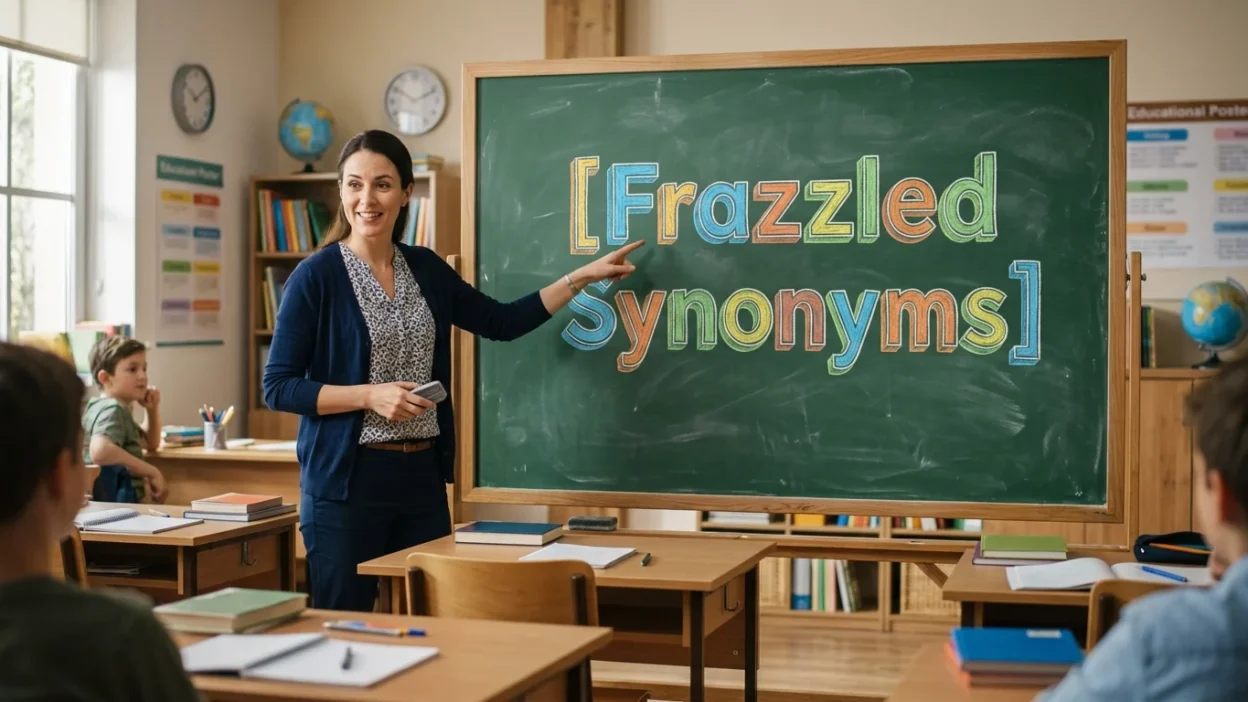
The word frazzled describes someone who feels extremely tired, stressed, worried, or mentally overwhelmed. It is often used when a person has too many things to deal with at once and begins to feel emotionally or mentally exhausted.
Learning frazzled synonyms helps students, English learners, writers, and content creators describe stress and exhaustion more precisely. Some alternatives focus on mental confusion, while others emphasize nervousness, tiredness, pressure, or emotional overload.
In this guide, you’ll learn the meaning of frazzled, explore 30 useful synonyms, and understand each word through simple definitions, example sentences, and practical usage notes.
What Does “Frazzled” Mean?
Frazzled means very stressed, tired, nervous, or confused because of too much pressure or activity. It often describes a person who feels mentally or emotionally exhausted.
For example:
- She felt frazzled after dealing with problems all day.
- The busy schedule left him completely frazzled.
Tone: Informal, descriptive, and slightly emotional.
Common Usage:
- Everyday conversations
- Work and study
- Stressful situations
- Family life
- Personal feelings
- Creative writing
30 Frazzled Synonyms
1. Stressed
Meaning: Feeling worried or under pressure.
Example Sentence: She was stressed because of the approaching deadline.
Best Usage Context: Everyday conversations, work, and education.
2. Overwhelmed
Meaning: Feeling unable to manage everything happening at once.
Example Sentence: He felt overwhelmed by his growing workload.
Best Usage Context: Work, studies, and personal situations.
3. Distraught
Meaning: Extremely upset or worried.
Example Sentence: She was distraught after hearing the bad news.
Best Usage Context: Serious emotional situations and formal writing.
4. Flustered
Meaning: Nervous and confused, especially when under pressure.
Example Sentence: He became flustered when everyone started asking questions.
Best Usage Context: Everyday conversations and storytelling.
5. Agitated
Meaning: Nervous, restless, or upset.
Example Sentence: The long delay left the passengers agitated.
Best Usage Context: Formal and descriptive writing.
6. Anxious
Meaning: Worried or nervous about something.
Example Sentence: She felt anxious before the important interview.
Best Usage Context: Everyday, academic, and professional writing.
7. Tense
Meaning: Unable to relax because of stress or worry.
Example Sentence: Everyone felt tense before the announcement.
Best Usage Context: Everyday English and storytelling.
8. Nervous
Meaning: Worried, uneasy, or afraid.
Example Sentence: He was nervous about speaking in front of the audience.
Best Usage Context: Everyday conversations.
9. Fraught
Meaning: Filled with worry, difficulty, or tension.
Example Sentence: The negotiations were fraught with uncertainty.
Best Usage Context: Formal writing and journalism.
10. Distressed
Meaning: Feeling very upset, worried, or troubled.
Example Sentence: The distressed employee asked for help.
Best Usage Context: Formal, professional, and emotional contexts.
11. Exhausted
Meaning: Extremely tired and lacking energy.
Example Sentence: She was exhausted after working two shifts.
Best Usage Context: Everyday conversations and personal writing.
12. Drained
Meaning: Having very little physical or emotional energy left.
Example Sentence: After the meeting, I felt completely drained.
Best Usage Context: Everyday and professional communication.
13. Worn Out
Meaning: Extremely tired after effort or stress.
Example Sentence: He was worn out after preparing for the event.
Best Usage Context: Informal conversations.
14. Weary
Meaning: Very tired, especially after a long effort.
Example Sentence: The weary travelers finally reached the hotel.
Best Usage Context: Literature and formal writing.
15. Overworked
Meaning: Having too much work and too little time to rest.
Example Sentence: The overworked employee needed a break.
Best Usage Context: Workplace and professional writing.

Gabriel John is a language enthusiast and grammar writer at Synolexes. He creates clear, practical content on English grammar, vocabulary, and writing, helping learners improve communication skills with confidence.